4
Desert races
155 miles each
8
New York City
Marathons
1
Pace
The back of the pack
At six, wearing water wings in the Red Sea, I pointed toward the opposite shore of Jordan and started paddling. My family stood on the shore, frantically waving me back. To me, the other side looked close. Much later I understood we had been seeing the same water in two very different ways. Mental Laundry is what that water looks like from inside it: the miles from the runner’s view, which is never the view from shore.
It is a book about running that is not really about running. It is about leading, showing up, and keeping going when no one is watching. It draws on four 155-mile self-supported desert races — Patagonia, the Atacama, Lapland, and the Gobi — and eight New York City Marathons, never once near the front, to show that a sustainable pace beats speed, that a setback is information rather than failure, and that movement is how a crowded mind clears itself.
Mental Laundry has a companion book: Camera Dark. Mental Laundry is the outside view: the miles, the deserts, the marathons, the back of the pack. Camera Dark is the inside view: what came into focus when the noise finally cleared. Same woman. One story.
This page is the companion to Mental Laundry: the music behind the chapters, the four deserts and New York City, the reading and watching list, the words that stayed, the conference runs, the vocabulary of the book, and the gear that carried the miles. Open any section below to go deeper.
Early Readers
First responses to the manuscript.
“This is a remarkable book. This is about running. This isn’t about running at all. This is about discovery. Runners will gobble this up. People who love superb writing will gobble this up. People who need inspiration will gobble this up. It is that good. I would not touch a word of this. Truly strong writing. Ship it. It reads clean, easily, evidence of extraordinary work which is anything but easy, and is extremely compelling. Vivid: all five senses and the human soul in crisis, lit. I’m invested every step here. I love what I read, and this is totally going to go places.”
Brian Newhouse, M.F.A., Peabody Award winning author of A Crossing: A Cyclist’s Journey Home; former Managing Director, American Public Media Classical
“What I love about Mental Laundry is that while the adventures are epic, so much of the real journey happens on her inner terrain. The discipline of showing up when no one is watching, the quiet work of preparing in solitude, and the shifts that happen along the way are lessons that reach far beyond running. I especially love the contrast between the miles she puts in alone through consistent, early morning runs throughout Central Park and the new community that emerges when she gets there. It’s a reminder that some of our most personal work happens in solitude, but we were never meant to do life entirely on our own. You don’t have to be a marathon runner to find yourself in these pages.”
Jenn Kautsch, founder of Sober Sis and author of Look Alive, Sis
“I think your book has all the elements to be a bestseller.”
Mary Gadams, Founder and CEO, Racing the Planet
“This book is a joyful, inspiring invitation to meet life’s challenges head-on—and jump in with both running shoes! It’s a treasure trove of encouragement to step outside your comfort zone, take a chance on the unexpected, and choose vulnerability over playing it safe. What I love most is the reminder that when we’re willing to take those leaps, we open ourselves to powerful connections—with ourselves, with others, and with the possibilities waiting for us. A wonderful, uplifting read that may just inspire you to take your own next brave step!”
Renée R., early reader of Mental Laundry and Camera Dark
The Soundtrack
Because I am a musician first, every chapter of Mental Laundry opens with an epigraph and a soundtrack of its own, taking the reader through the music I live in, from classical to jazz, world, and rock. Robert Johnson’s Delta blues. Barber’s Adagio for Strings arriving on shuffle at the hour of what seemed like death in the Atacama salt flats. Tuvan throat singing on the eve of the Gobi. Sinatra at the Verrazano. The soundtrack includes works by longtime DCINY collaborators Eric Whitacre, Sir Karl Jenkins, Heather Sorenson and Christopher Tin, original pieces by my husband, Rob Derke, and “Flautando,” written for me by Croatian composer Matej Meštrović.
The book works without it. The music adds depth and sense to the journey. All of the music lives in one playlist, in reading order. Press play and let it run.
A few of the pairings
Ten chapters, ten reasons the music is there. The full set, chapter by chapter, is in the playlist above.
Ch. 1 · Water Wings Toward Jordan
“You can’t cross the sea merely by standing and staring at the water.” — Rabindranath Tagore
Kia Hora Te Marino
Christopher Tin
A Māori peace prayer, “may the sea lie calm before you.” The Red Sea, and a blessing for safe passage that returns at the book’s close.
Listen on Spotify ↗Ch. 9 · SAS Pace
“Well-being is attained little by little and nevertheless is no little thing itself.” — Zeno
Cross Road Blues
Robert Johnson
Delta blues at its most essential, spare guitar and voice against silence. The pace that knows where it is going, “SAS” Slow As Shit or “Patagonia Pace”, born on Day 1 in the Andes.
Listen on Spotify ↗Ch. 11 · The Trainer’s Compliment
The piece written for Iris.
Flautando
Matej Mestrovic
An original composition written for me, the flautist. An elite runner told me, after the Long March, that a full night out there would have been the end of him. I filed his words under evidence, and this is their sound.
Listen on YouTube ↗Ch. 20 · Twelve Miles
Adagio for Strings
Samuel Barber
First on the shuffle, twelve miles from camp with no voice and an empty tank: the most famous funeral piece in the Western canon, arrived at the exact wrong moment. I cackled. Then a rainbow, and my first glimmer with a whoosh of indescribable energy.
Listen on Spotify ↗Ch. 28 · The Reindeer at the Top of the Mountain
Amazing Grace
Rhiannon Giddens
Grace and redemption at the Arctic summit, five miles above the treeline, where a small herd of black reindeer, my “unicorns,” let me share their space.
Listen on Spotify ↗Ch. 35 · The Race Start
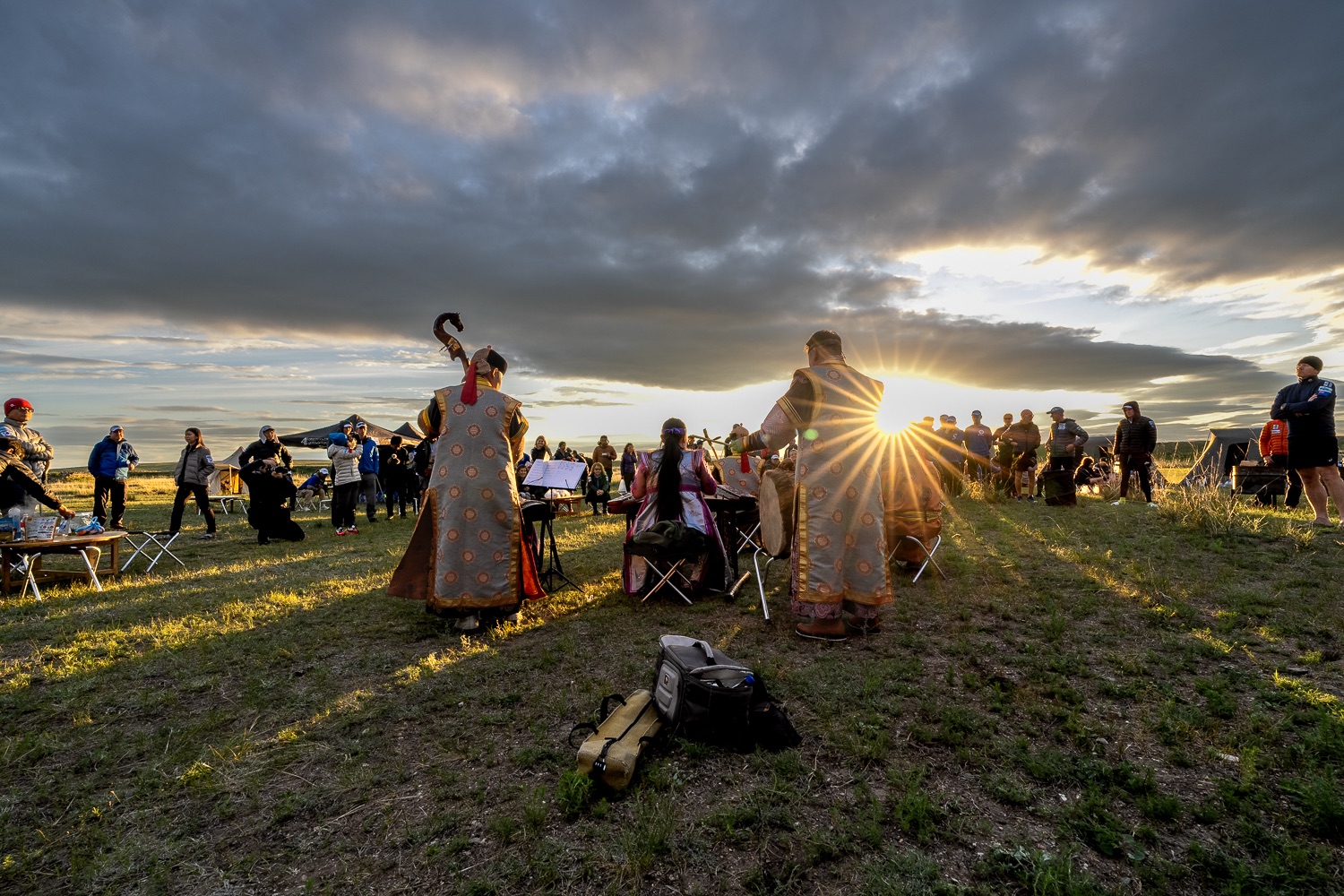
Huun-Huur-Tu
Tuvan throat singing
The pre-race concert on the eve of the Gobi: the lowest of lows, the rhythmic lull, the impossible layered harmonics and overtones of Tuvan throat singing. This is the sound, and it brought me to tears before a single mile was run.
Listen on Spotify ↗Ch. 37 · Day 2: My Engine Conked Out
The End
The Doors
Eleven minutes of heat and dread. The Gobi as fever dream, and the sound of an engine cooking out before the decision is made. The DNF that turned out to be information, not failure.
Listen on Spotify ↗Ch. 46 · Mental Laundry
“The mind is everything. What you think you become.” — attributed to Buddha
Rhapsody in Blue
George Gershwin
The city in one piece of music. Mental laundry, New York City edition: the run does not solve the problems, it cleans the lens through which you see them.
Listen on Spotify ↗Ch. 51 · The Convergence
Sober
Pink
November 2, 2025: my eighth NYC Marathon, my birthday weekend, and one year sober, all stacked on one day. The thread that carries into Camera Dark, set to exactly the song it is about.
Listen on Spotify ↗Ch. 52 · The Medal Is Not for the Finish
Seasons of Love
Original Broadway Cast of RENT
Five hundred twenty-five thousand six hundred minutes. How you measure a life, and it is not the medal. The medal was never for the finish; it was for every early alarm and every refusal to quit.
Listen on Spotify ↗The music for every chapter, in reading order, lives in the Mental Laundry Soundtrack on Spotify.
The Four Deserts & New York City
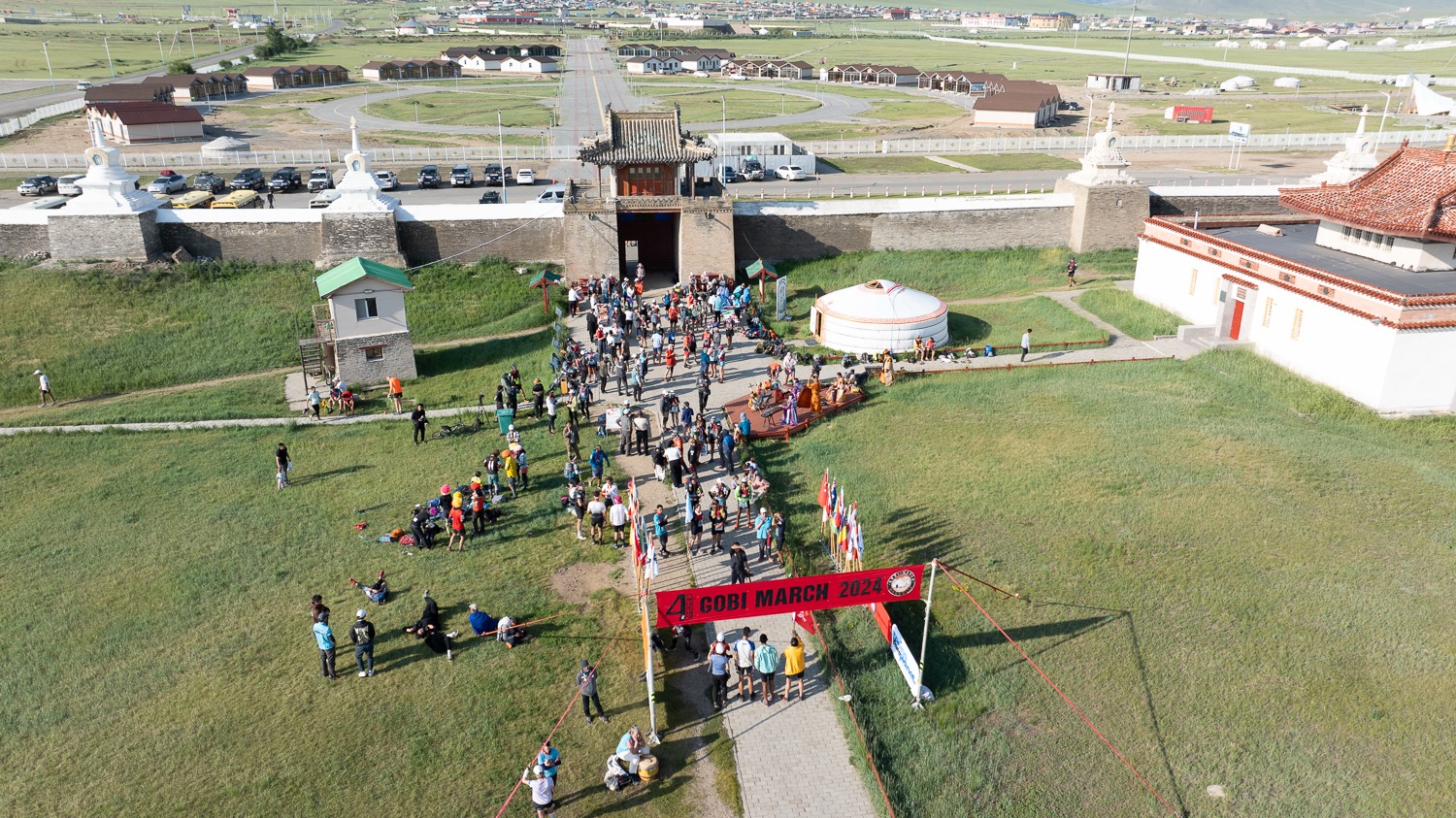
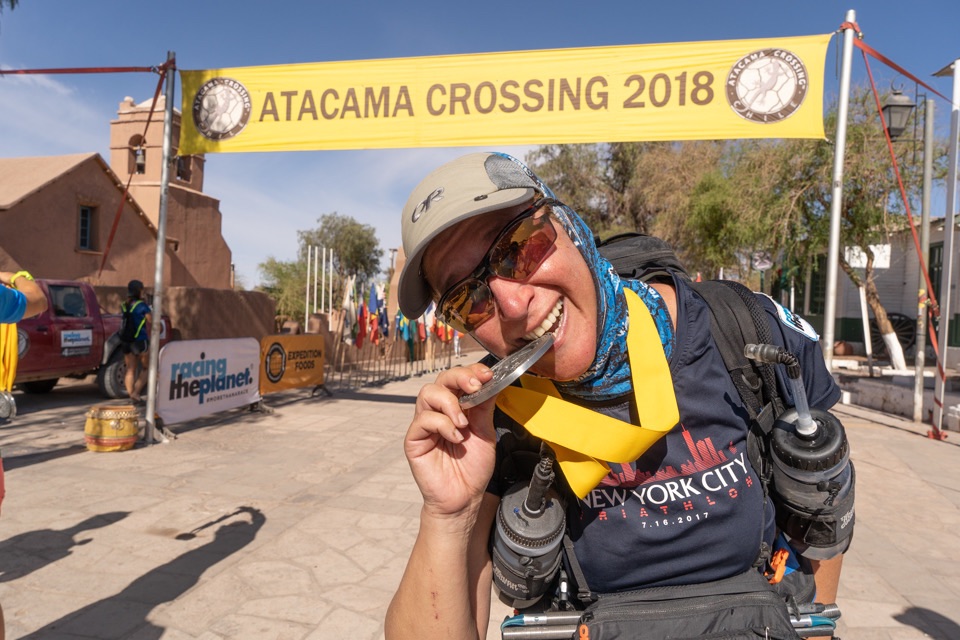
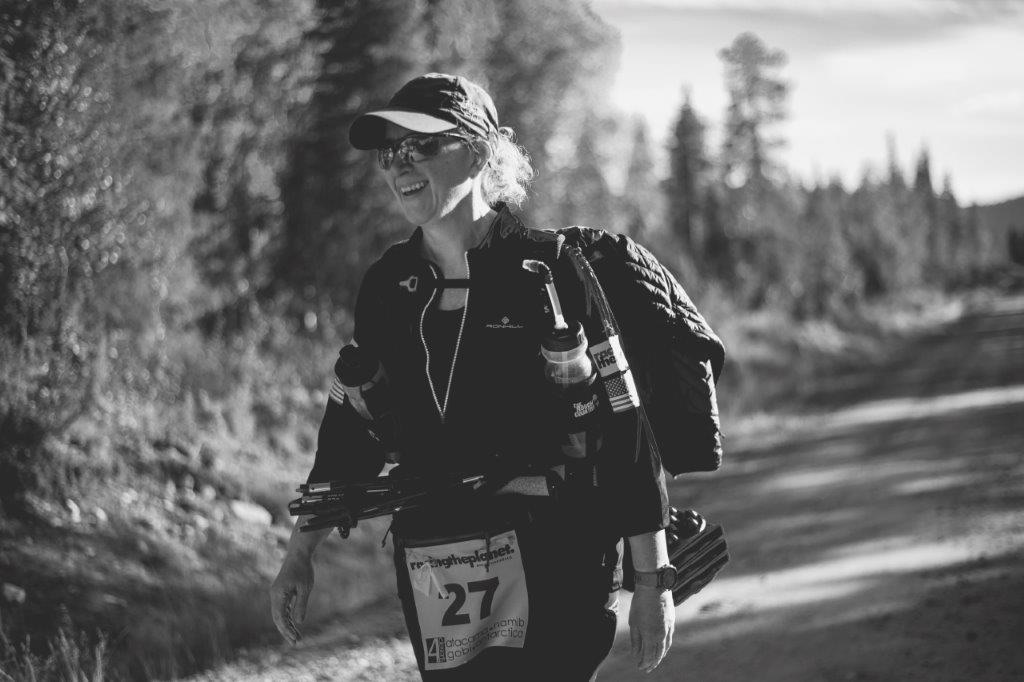
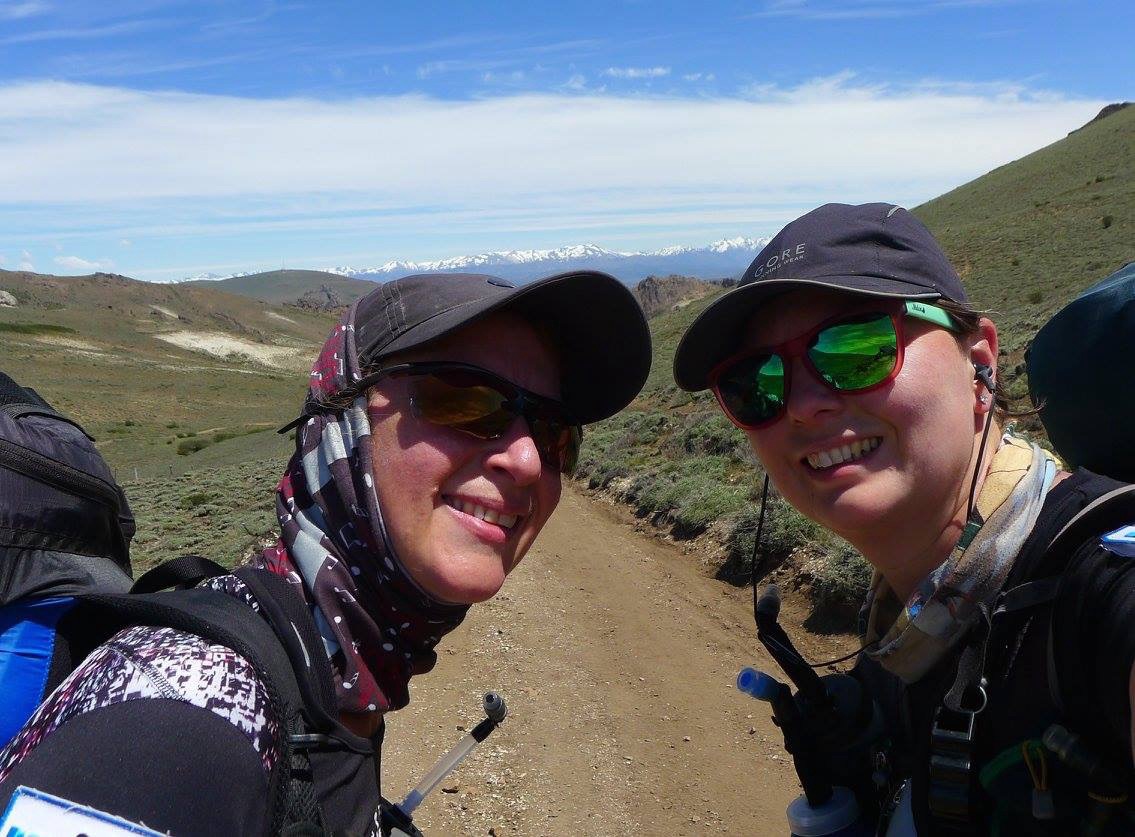
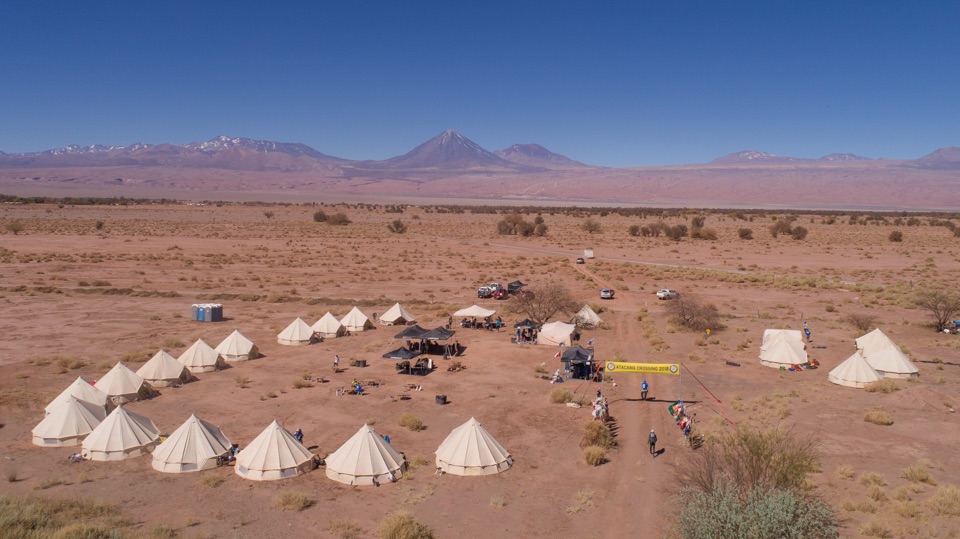
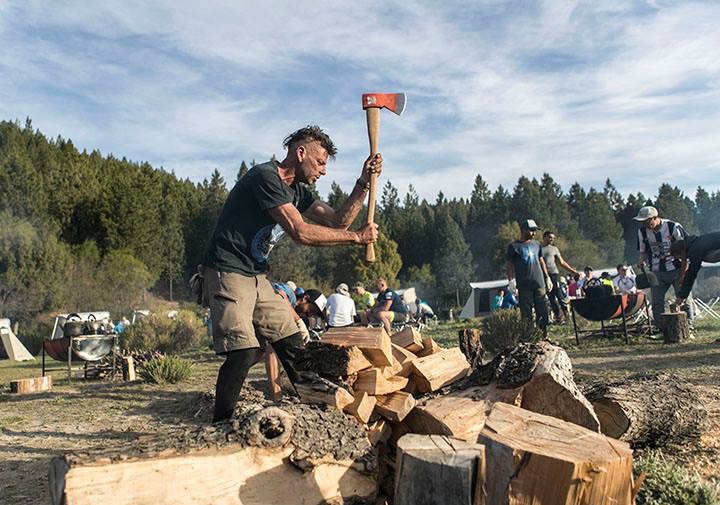
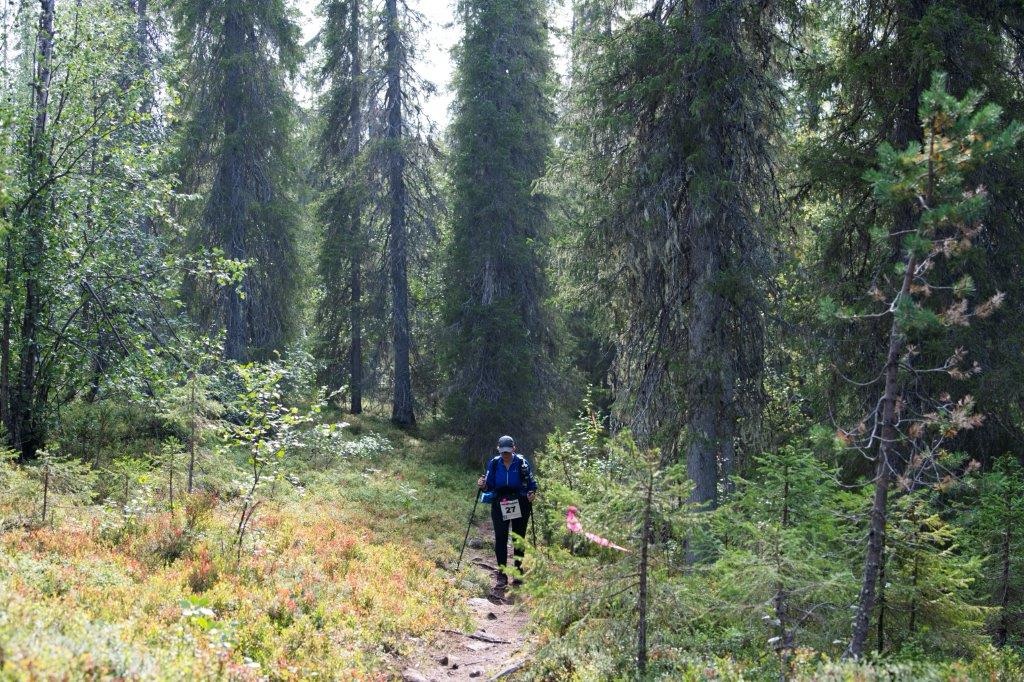
Four 155-mile self-supported races across the deserts of the world, carrying everything I needed for seven days on my back, and the marathon I come home to every November. Each was its own contained world, with its own cast, its own terrain, its own turning point. Racing the Planet has opened its full professional photo and video library from all four desert races for the book; a selection lives here.
2017 · Argentina
Patagonia
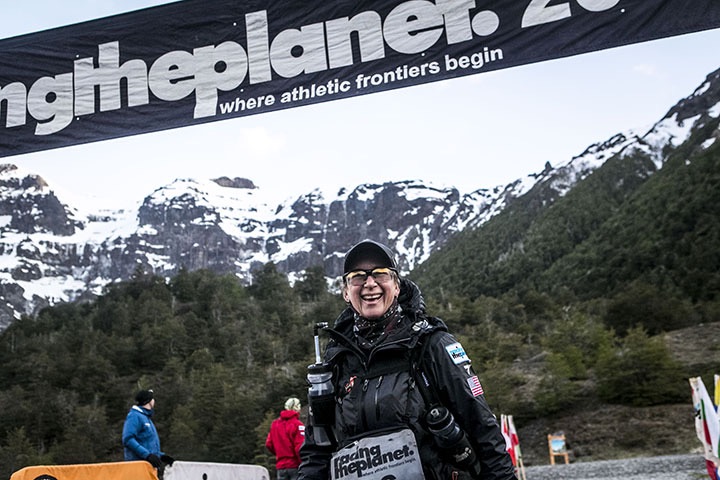
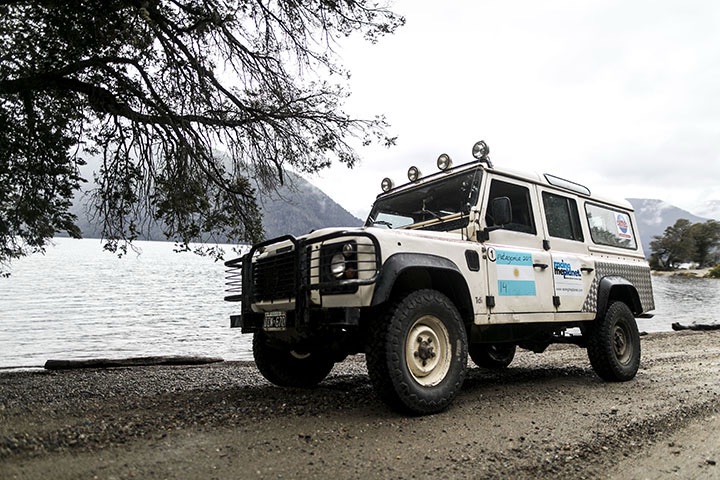
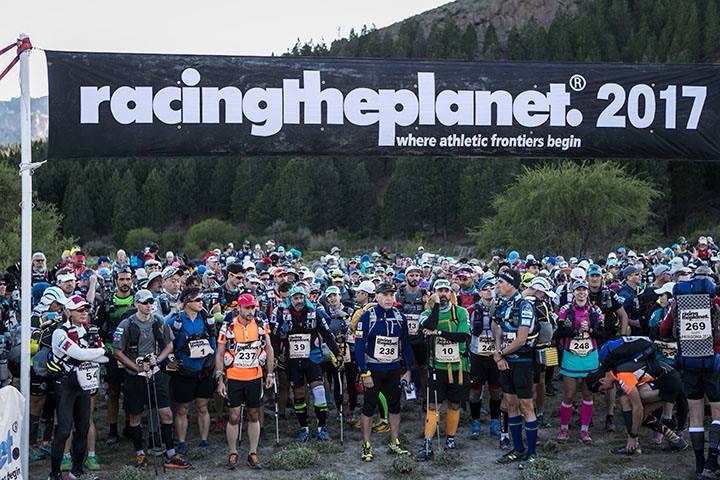
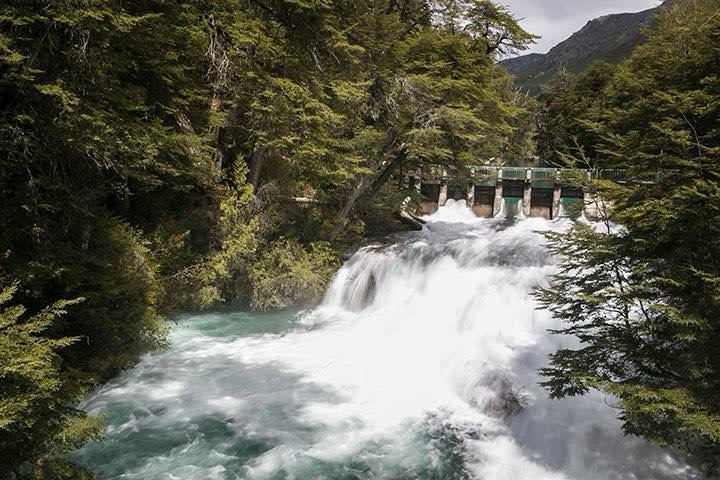
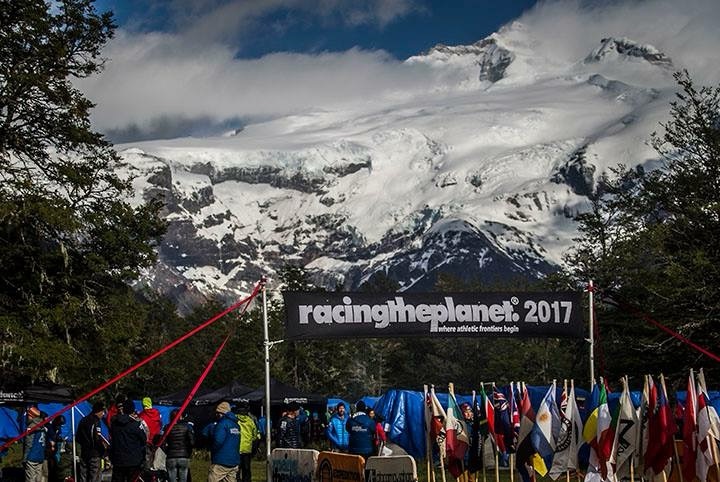
The first. One hundred and fifty-five miles through the Andes, reached by white-water raft, run at the back of the pack with a thirty-pound pack and no idea whether I could do it. This is where SAS Pace was born on Day 1, where the drums first welcomed me into camp after eleven hours of moving, and where I learned that the slowest gazelles see what the leaders never do. I came in dead last, and proud.
2018 · Chile
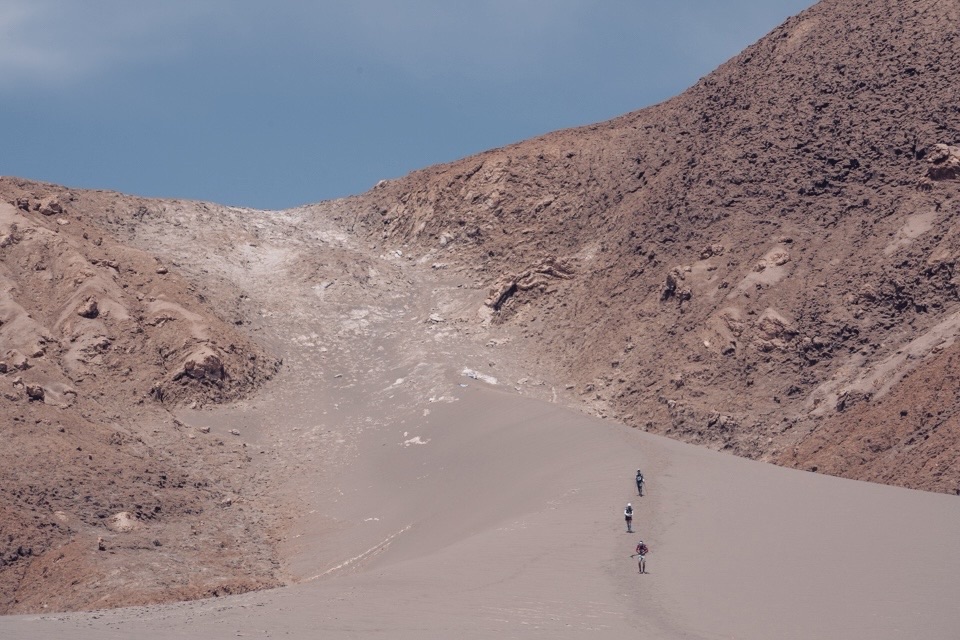
The Atacama
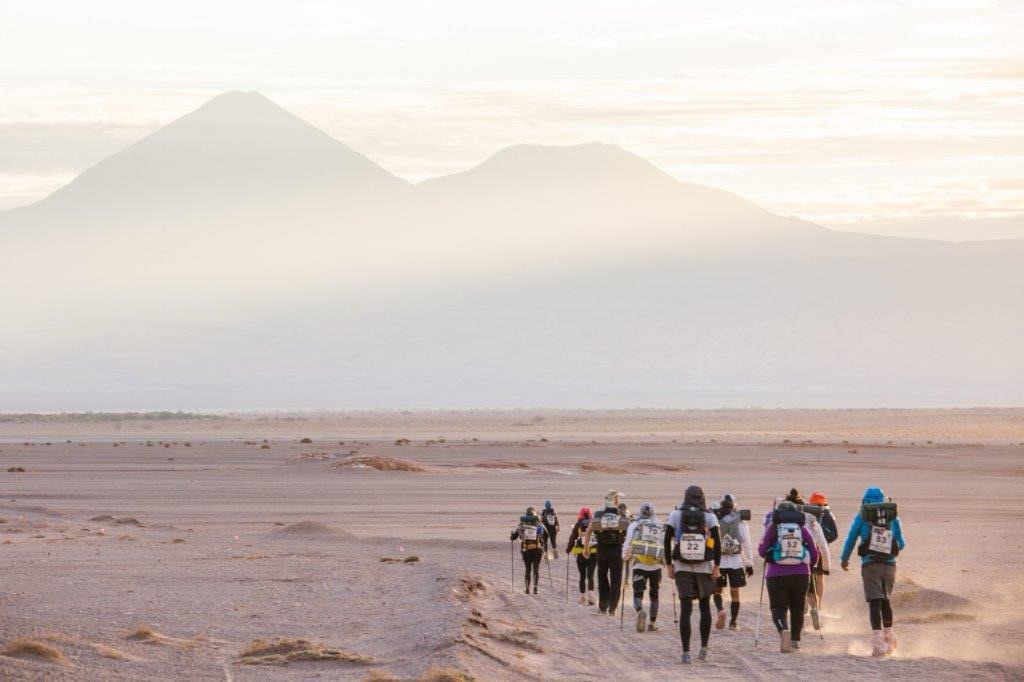
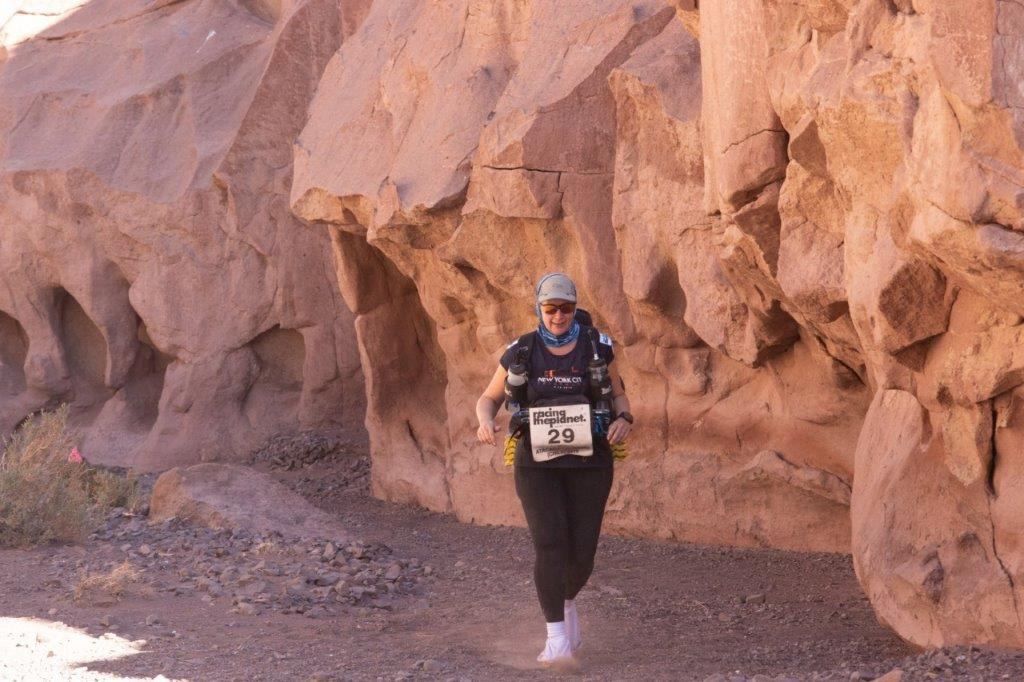
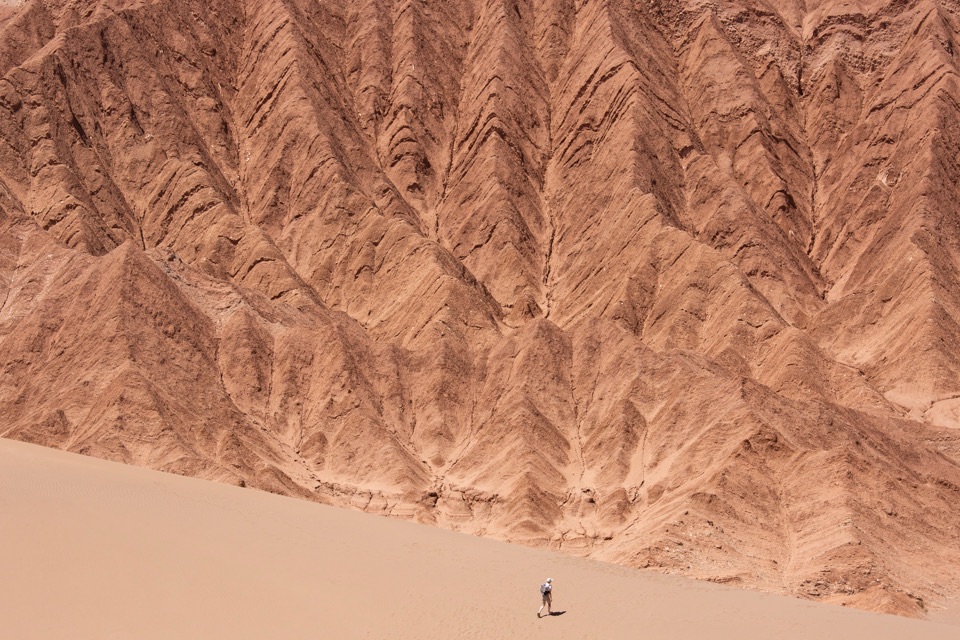
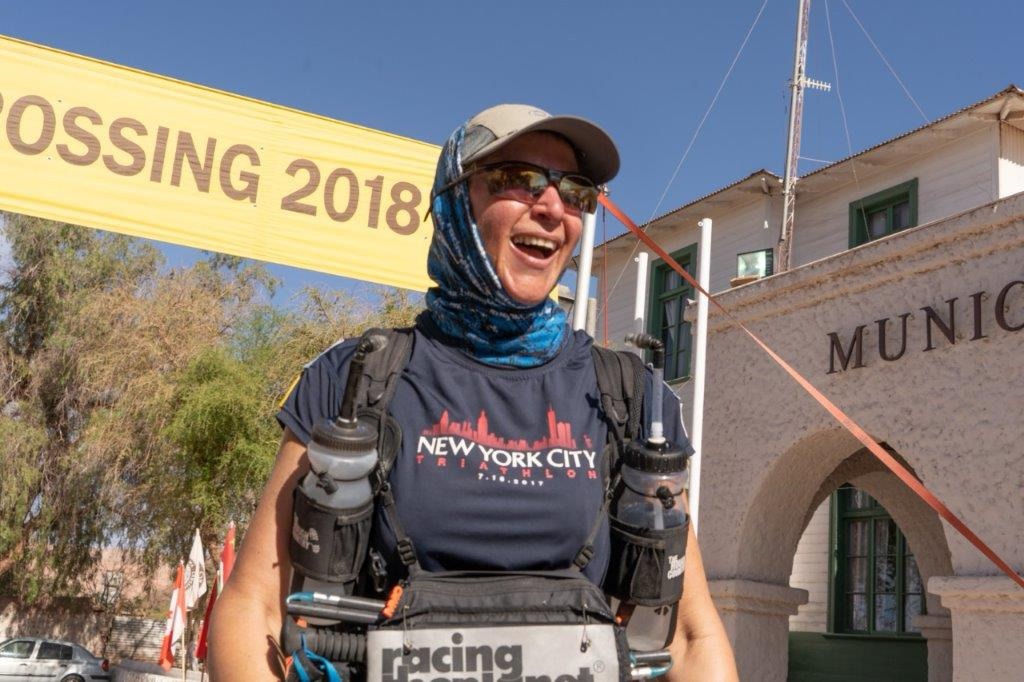
The driest place on earth, and the race that taught me Pocket Time: do not stop when you don’t need to; bank every minute on the easy stretch for the hard one ahead. Salt flats and slot canyons, a dog in the Valley of Death, and hour eleven twelve miles from camp when Barber’s Adagio came up on shuffle and a rainbow gave me my first glimmer.
From Chapter 20 · Twelve Miles
Eleven hours and thirty-five minutes of desert. Salt flats. Terrain that had no interest in being kind.
…
Twelve miles from camp, I hit the wall.
The gas tank was empty. Not low. Empty. No will to trudge on, no internal voice pushing me forward, nothing. Just the flat desert and the heat and twelve miles between me and the tent I had been dreaming about for hours.
I stopped.
…
I did not sit down.
Try the phone.
…
I hit shuffle on the only playlist I had ever built, the entire mess of my musical life with no order to it at all — classical and folk and pop and the soundtracks of my daughter’s growing up, all of it thrown in together.
The first notes I heard were Adagio for Strings.
…
I started laughing. I cackled. I cackled aloud, alone, in a voice that had not been mine for days, at the timing and at the joke, and because what else do you do when you are dying a little in the desert, and the universe cues the funeral music.
I hit next.
Bye Bye Miss American Pie.
…
I started walking. Then I started running. Then I started singing, and when I tell you I sang at the top of my lungs across the Atacama at hour eleven with no voice, I mean exactly that, the voice I did not have came back for Don McLean, and the body that had been done was not done.
…
And then the rainbow.
It came out of the mountains ahead, arching across the desert sky with a completeness and a clarity that felt less like weather and more like punctuation.
I just knew that something had glimmered.
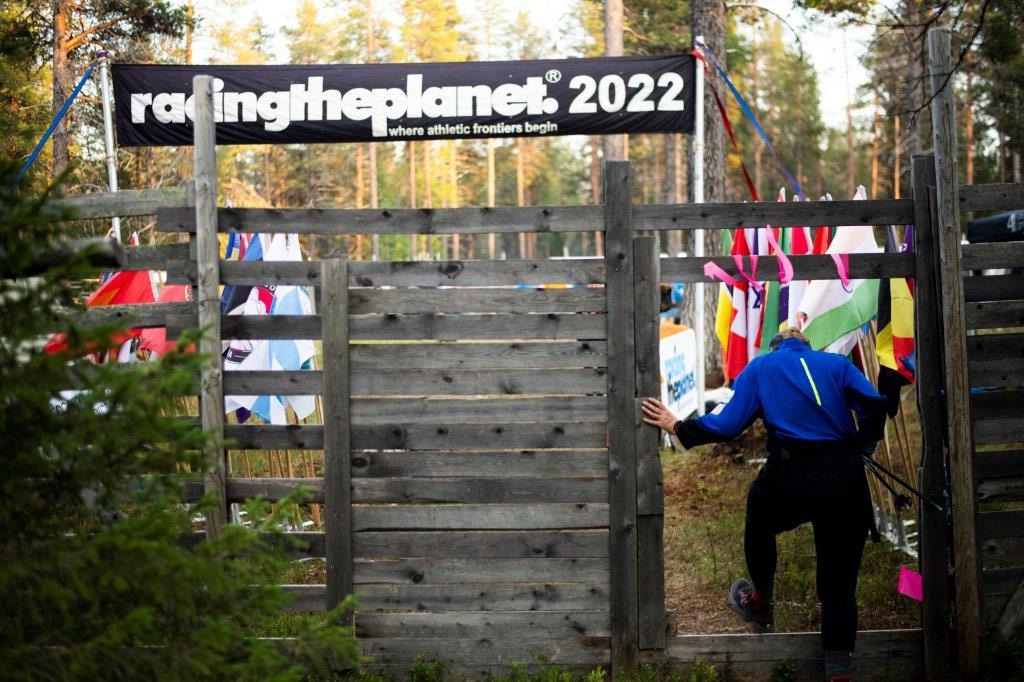
2022 · Finland
Lapland
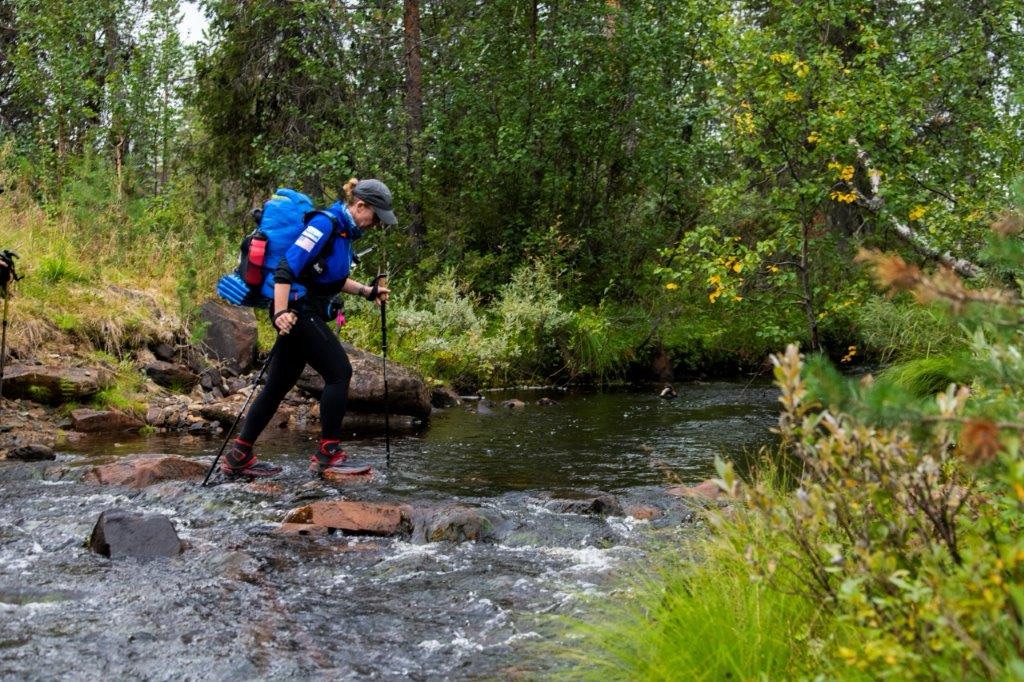
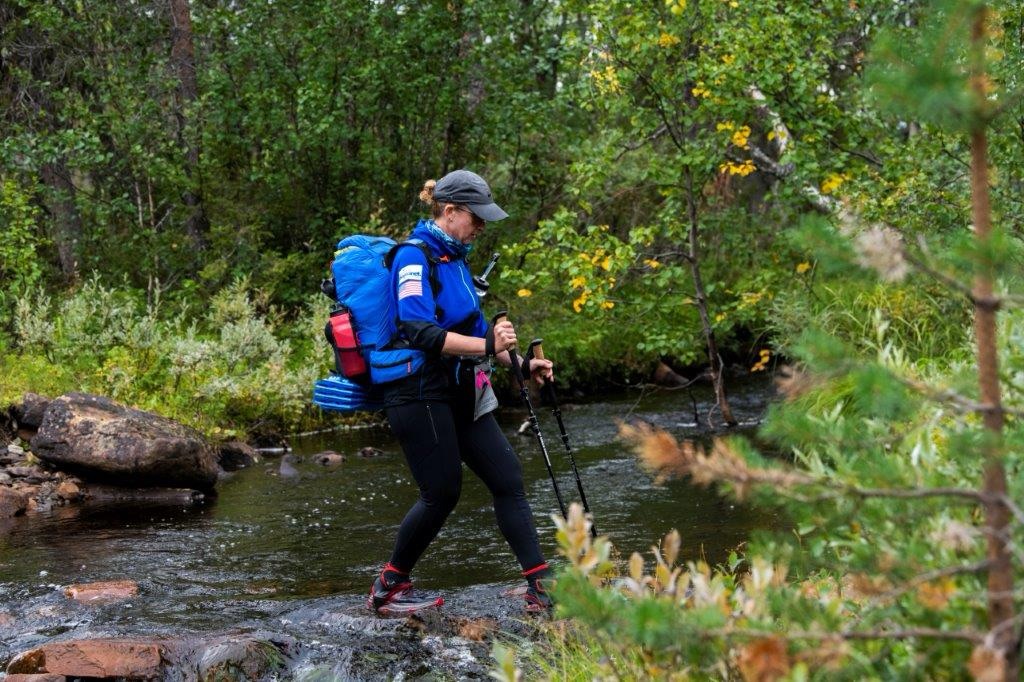
The land of the midnight sun, run for the first time with hearing aids and no backup pair, where rest required not darkness but permission. Tent 22, the Blueberry Tent. A herd of black reindeer at the top of a mountain, the one moment I will not try to explain. And a satellite phone handed to me in the rain with news from home.
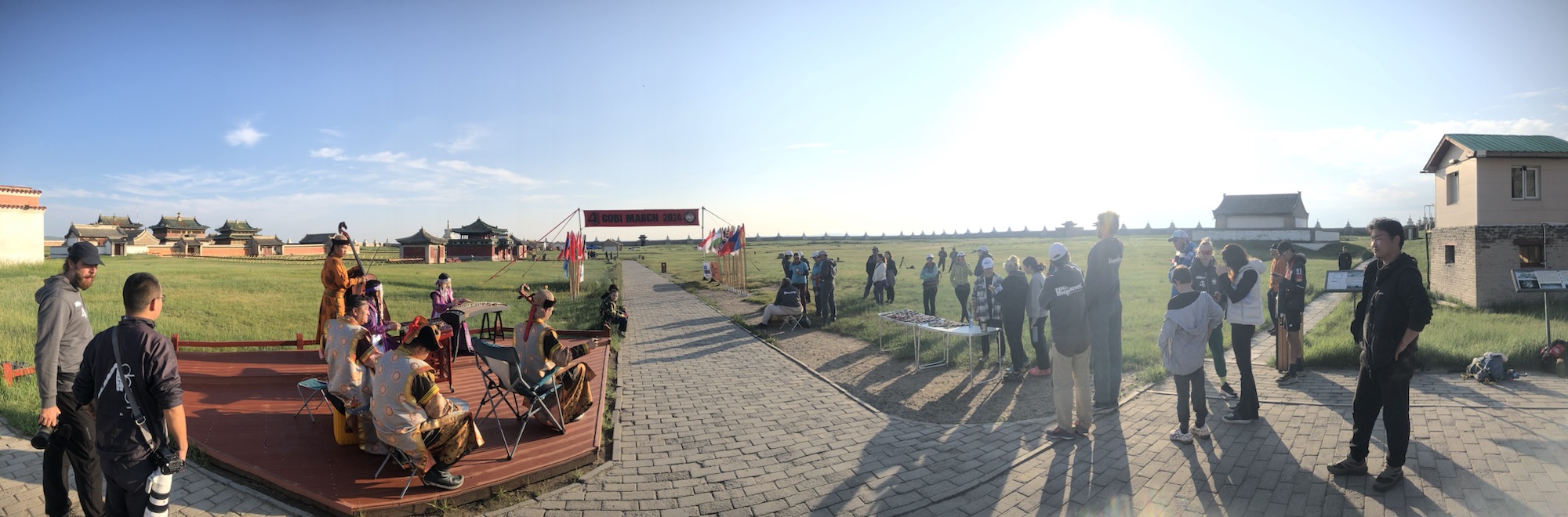
2024 · Mongolia
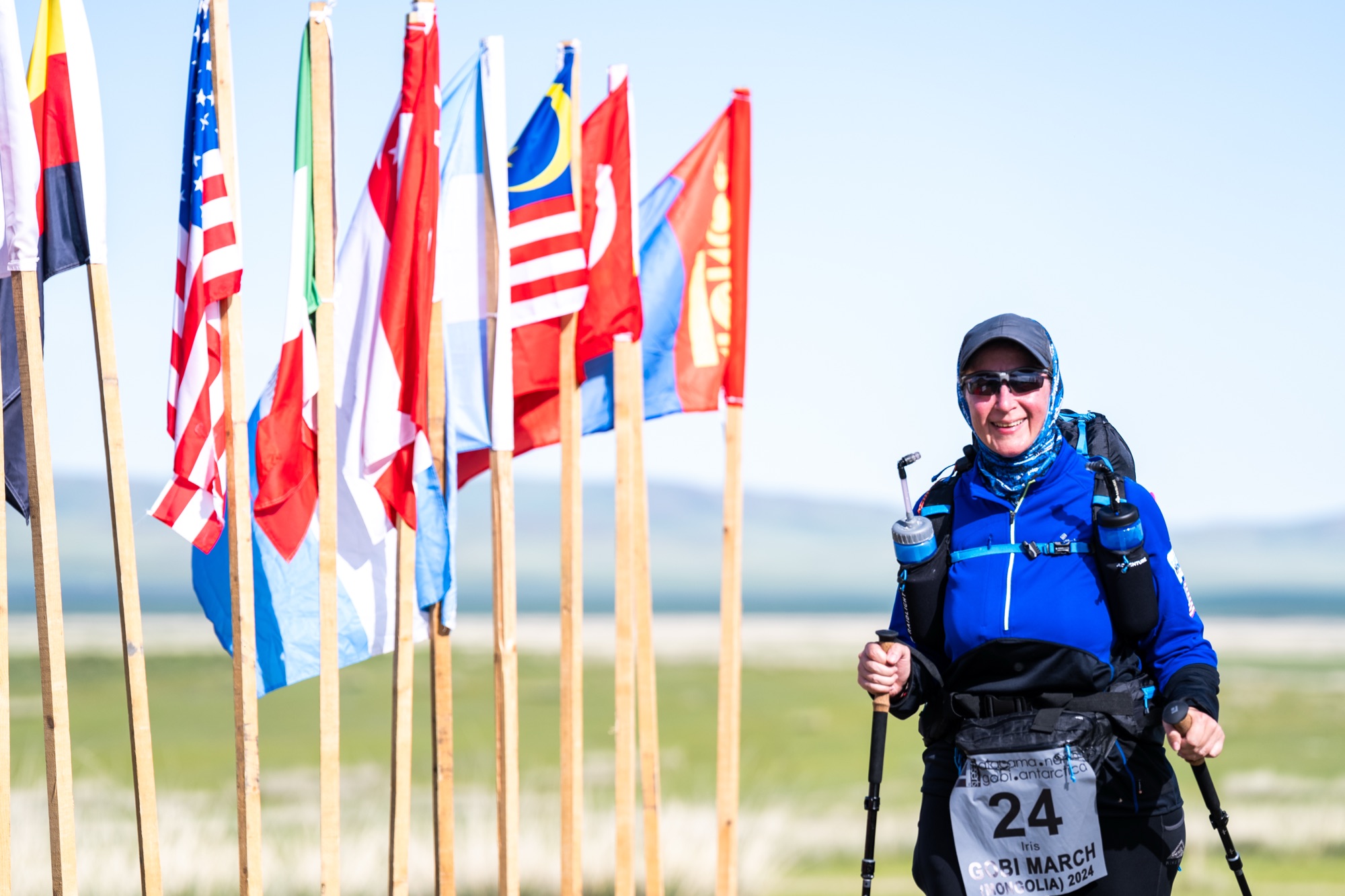
The Gobi
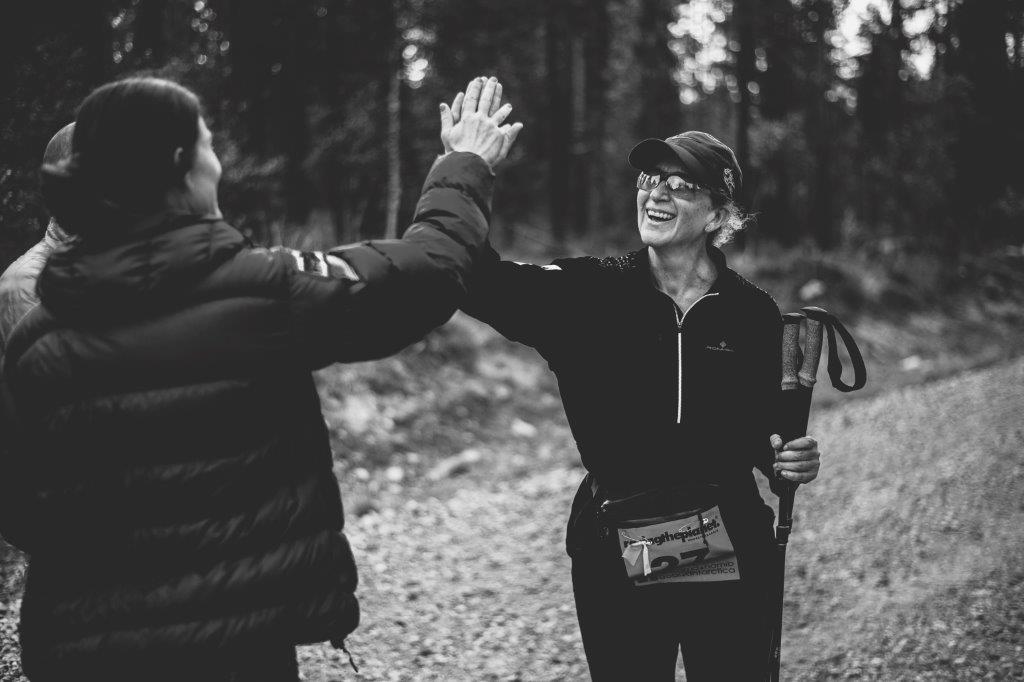
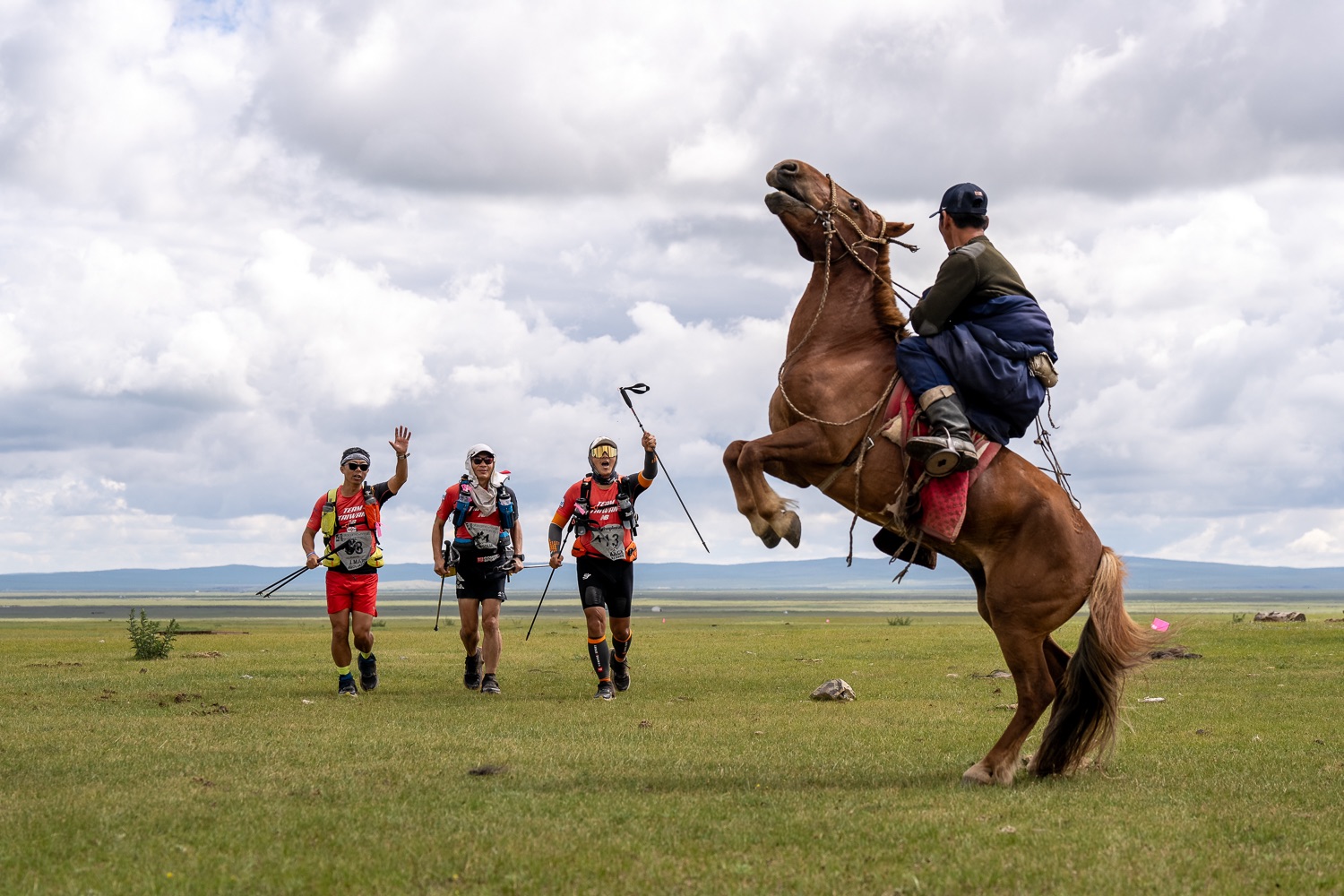
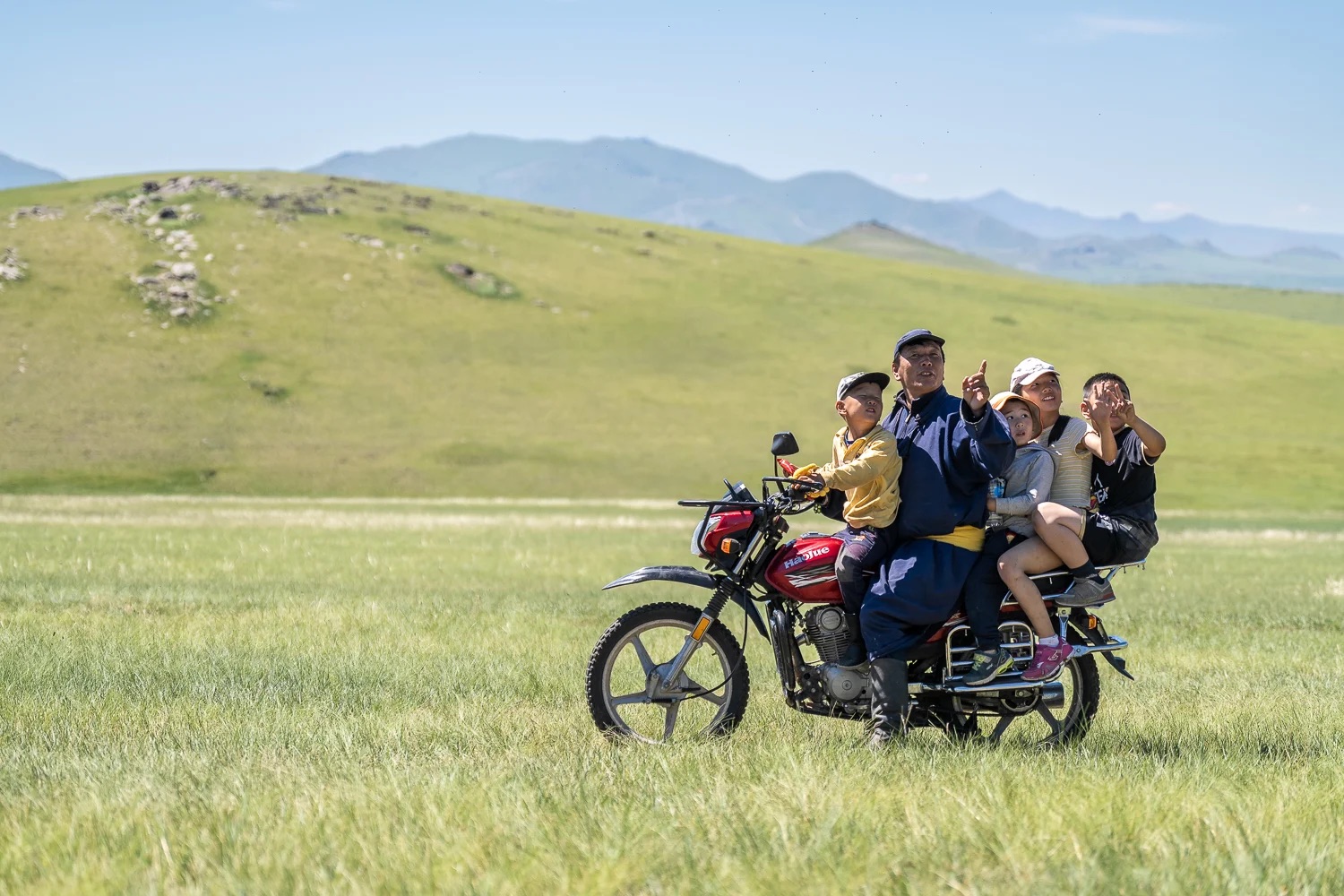
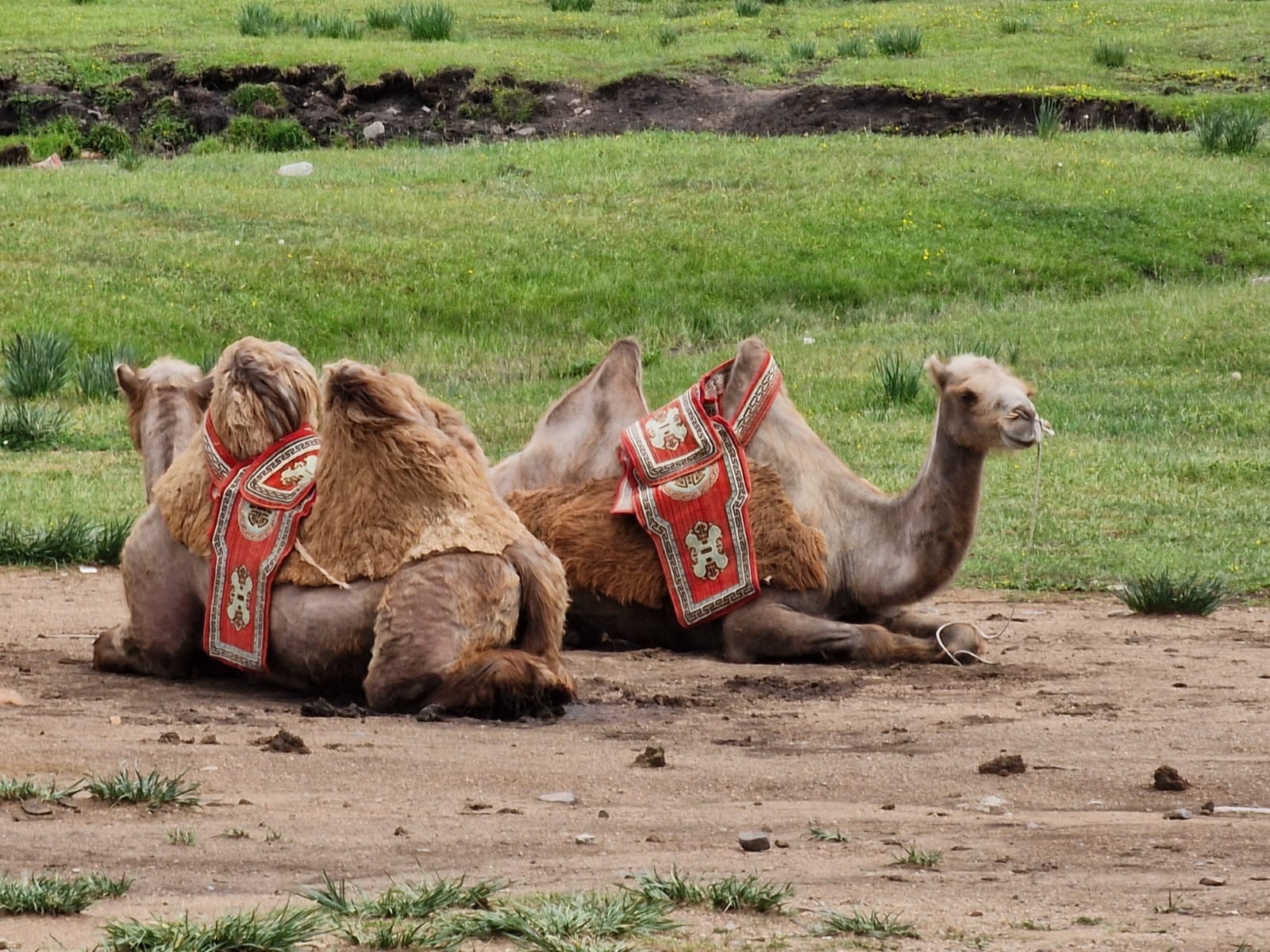
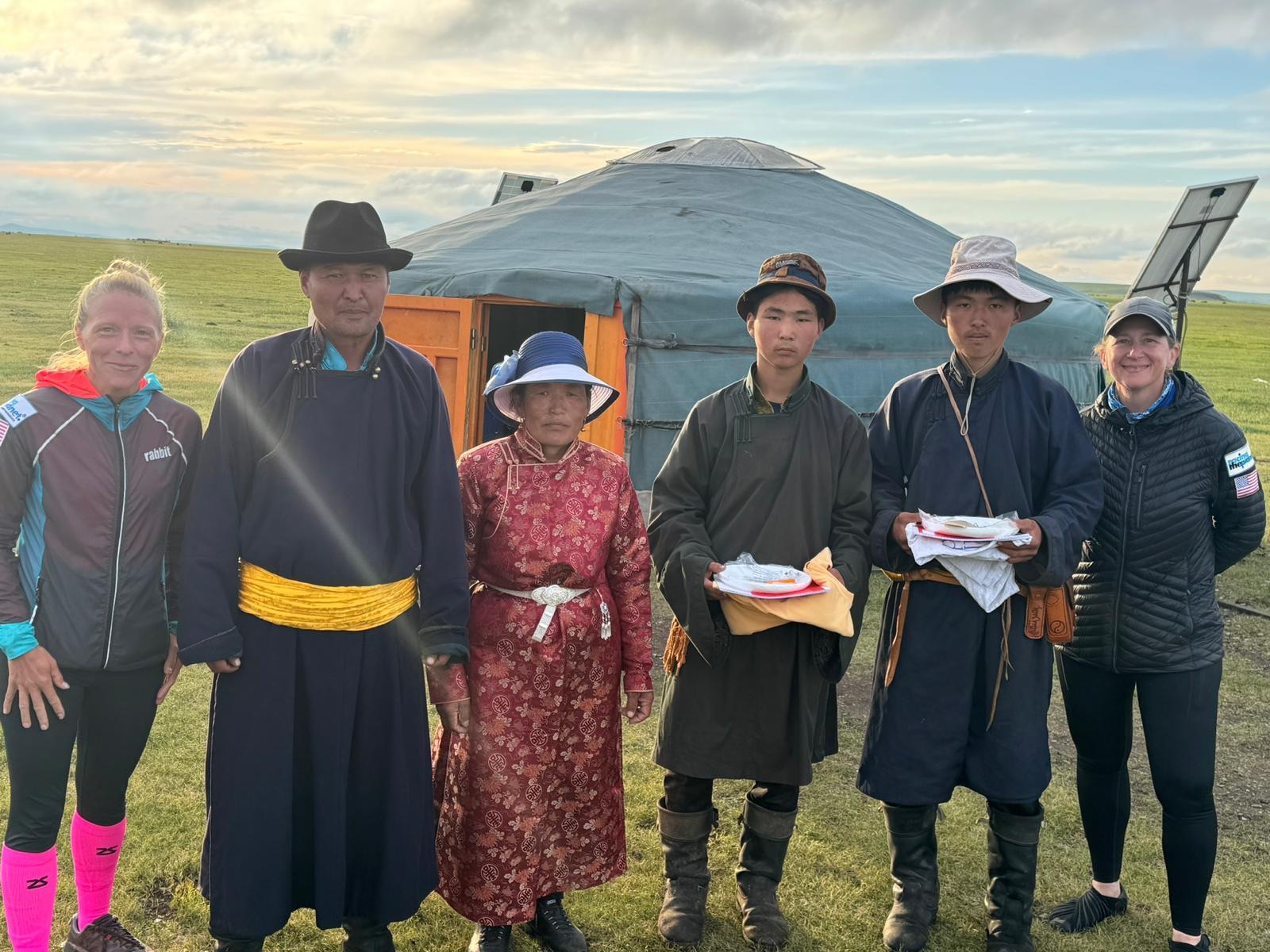
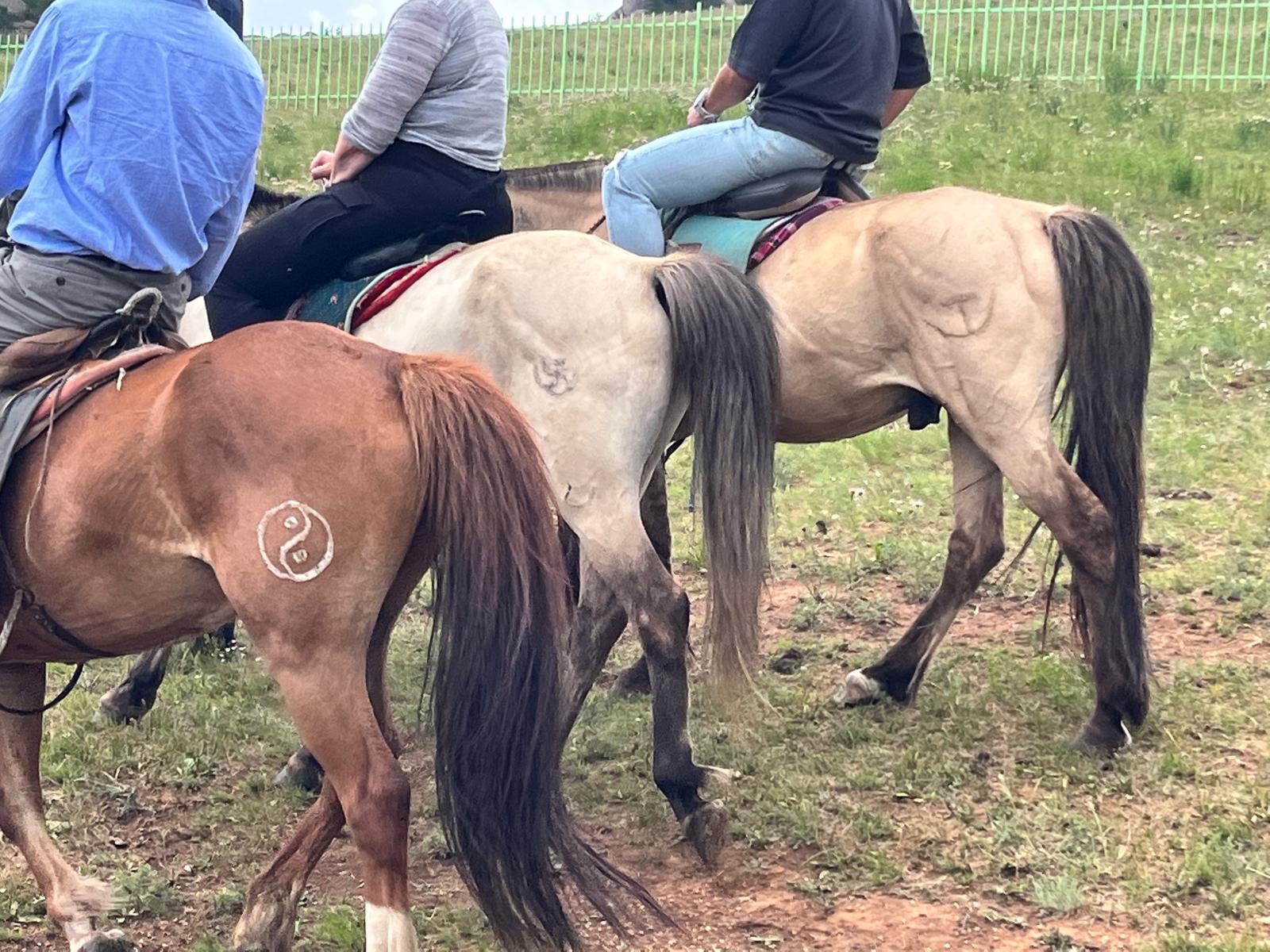
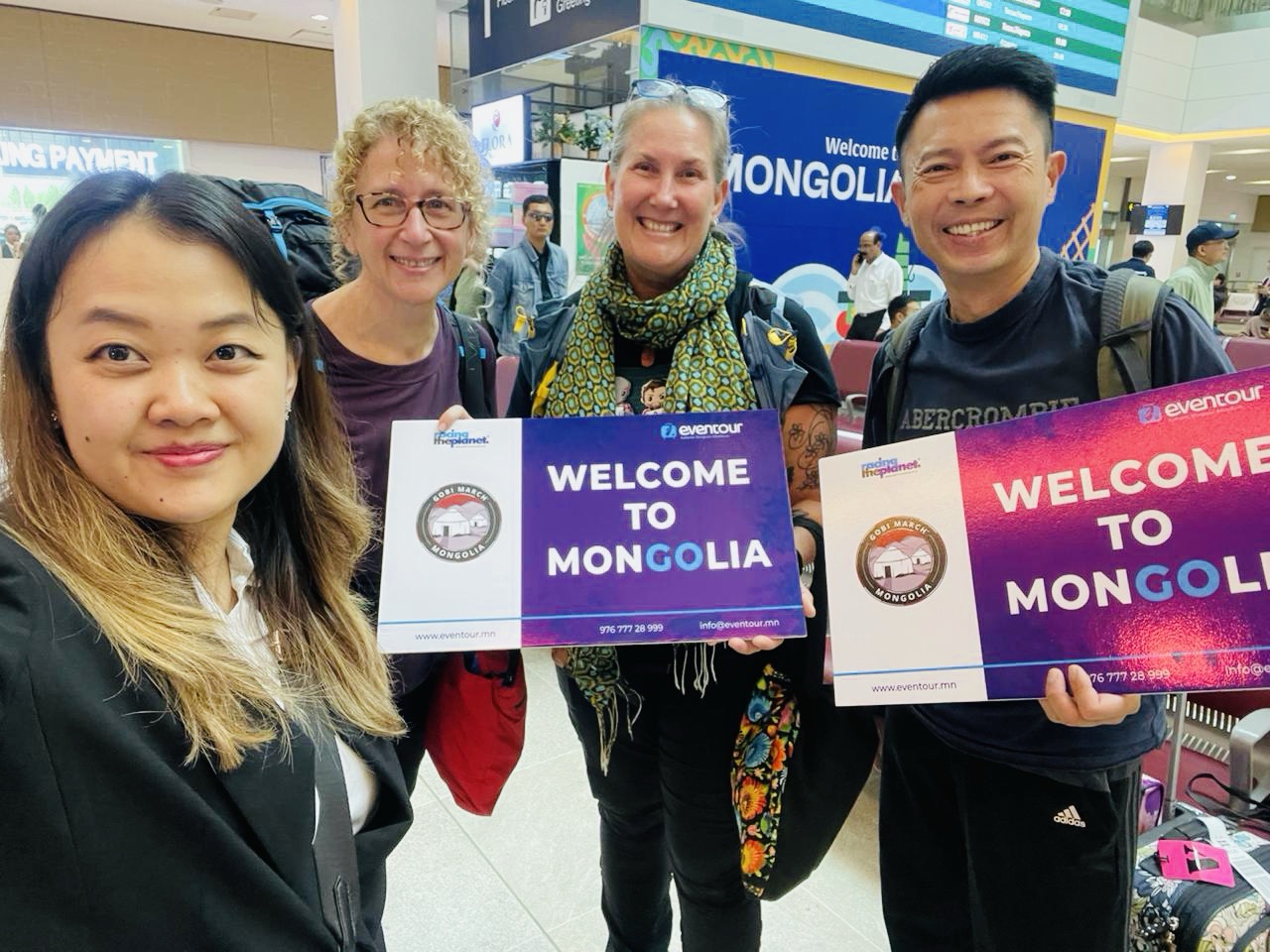
The DNF. My engine conked out on Day 2, and within hours I traded my racer’s bib for a volunteer vest and found the best week of the trip on the other side of the finish line. Tuvan throat singing on the eve of the race, glow sticks at sunset, the drums that play until the last runner comes in, and the Eternal Knot I had inked on my forearm before I understood what it was marking. The setback was information, not failure.
Every November · New York City
The NYC Marathon
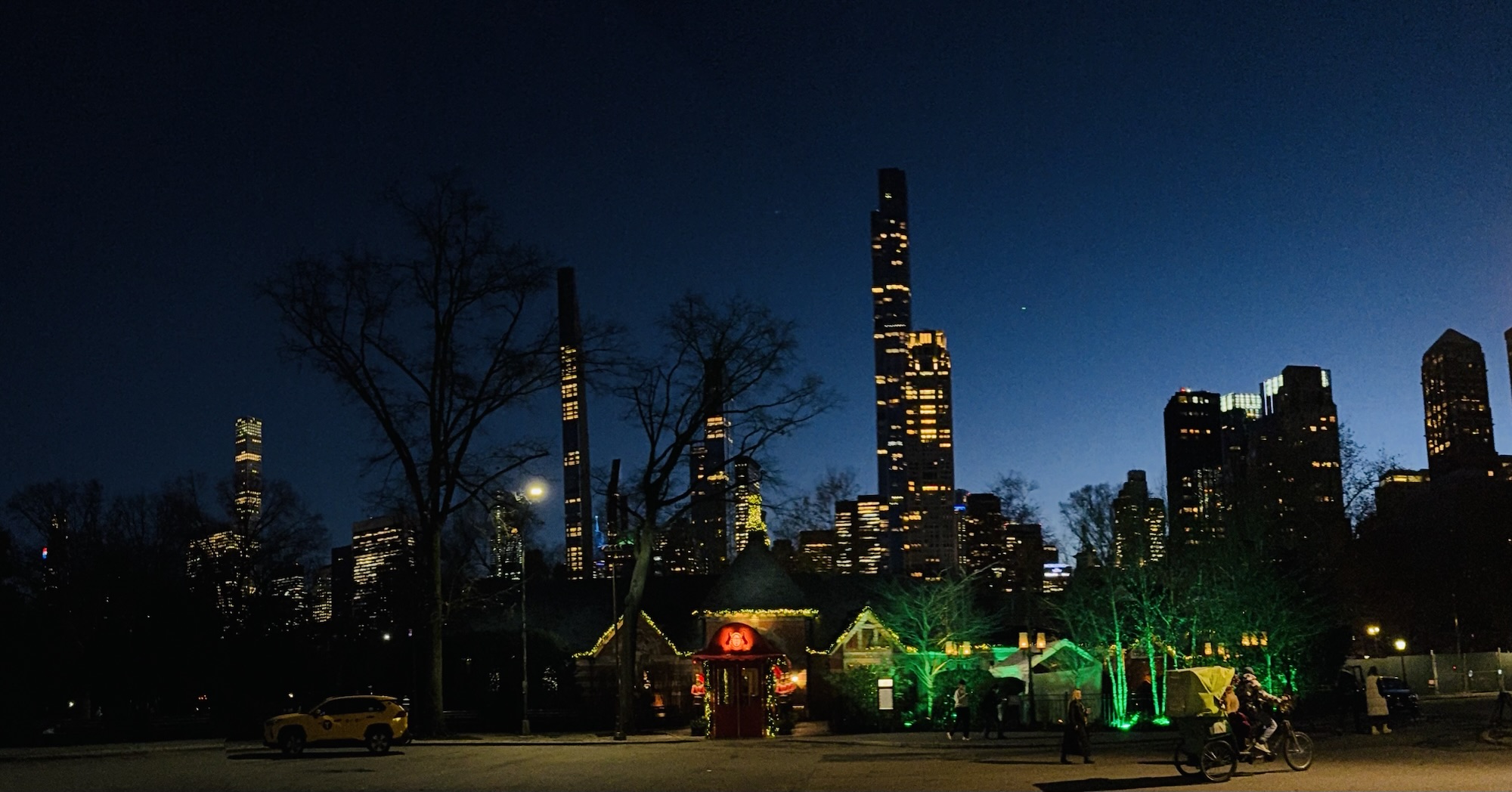
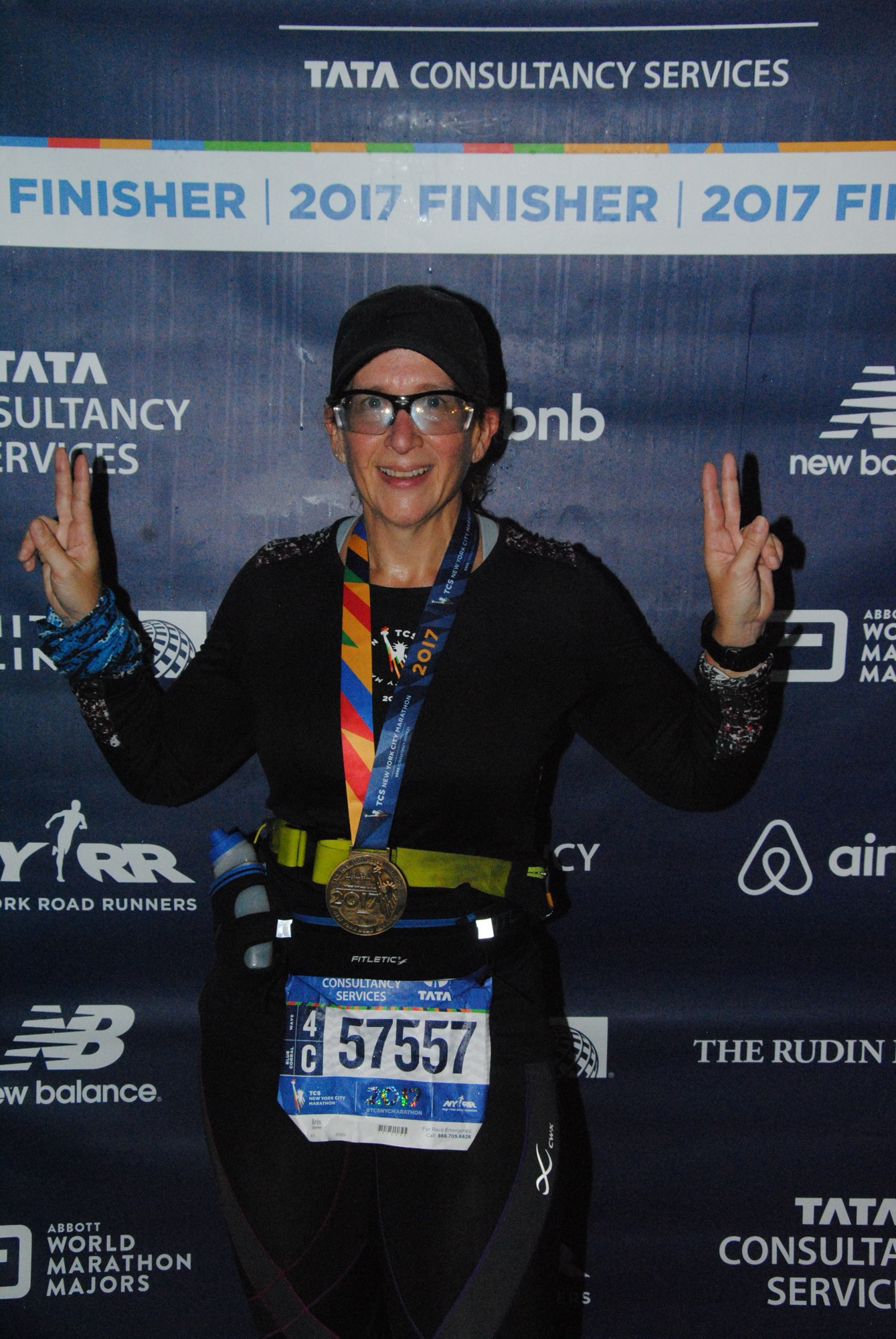
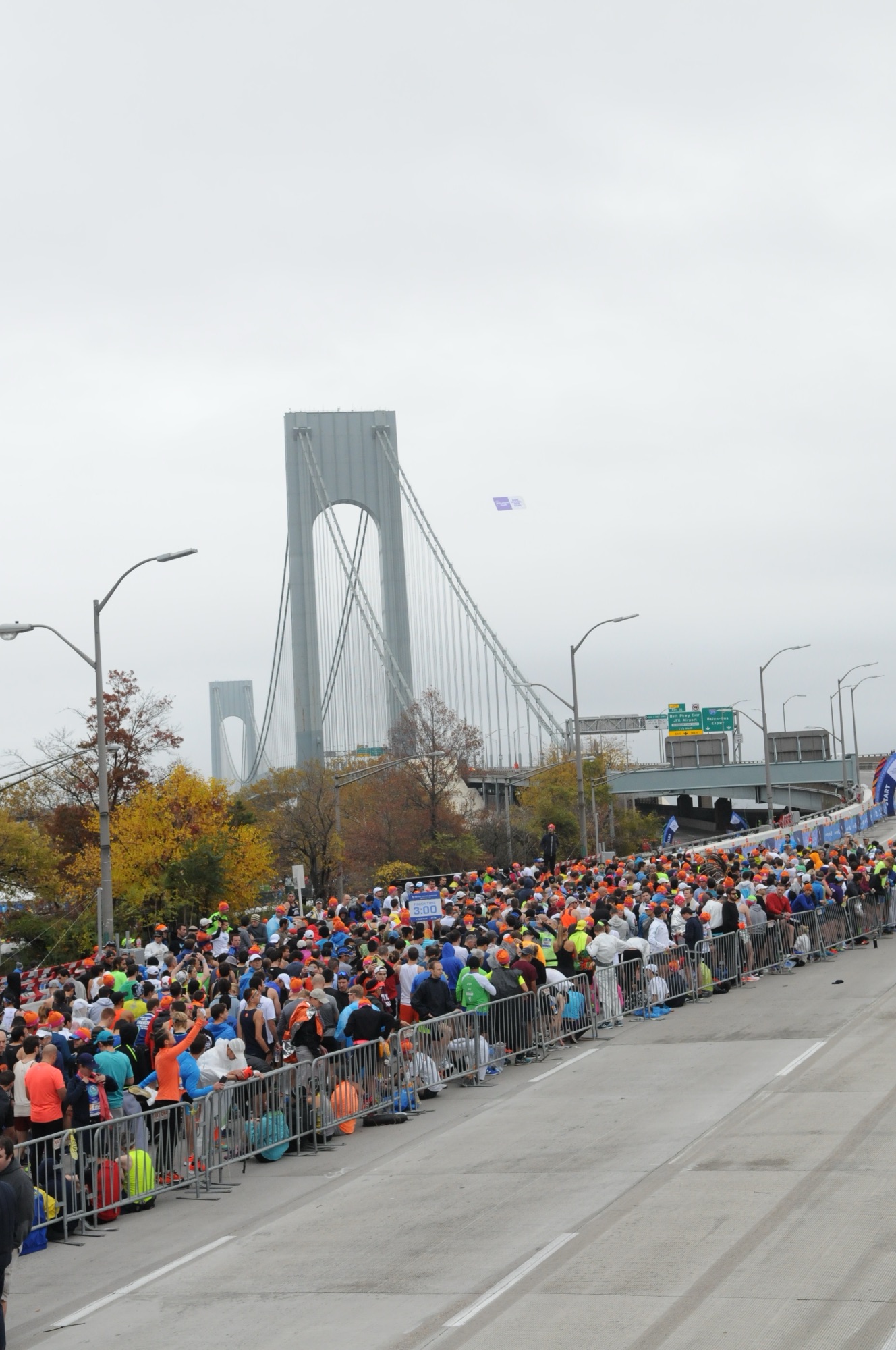
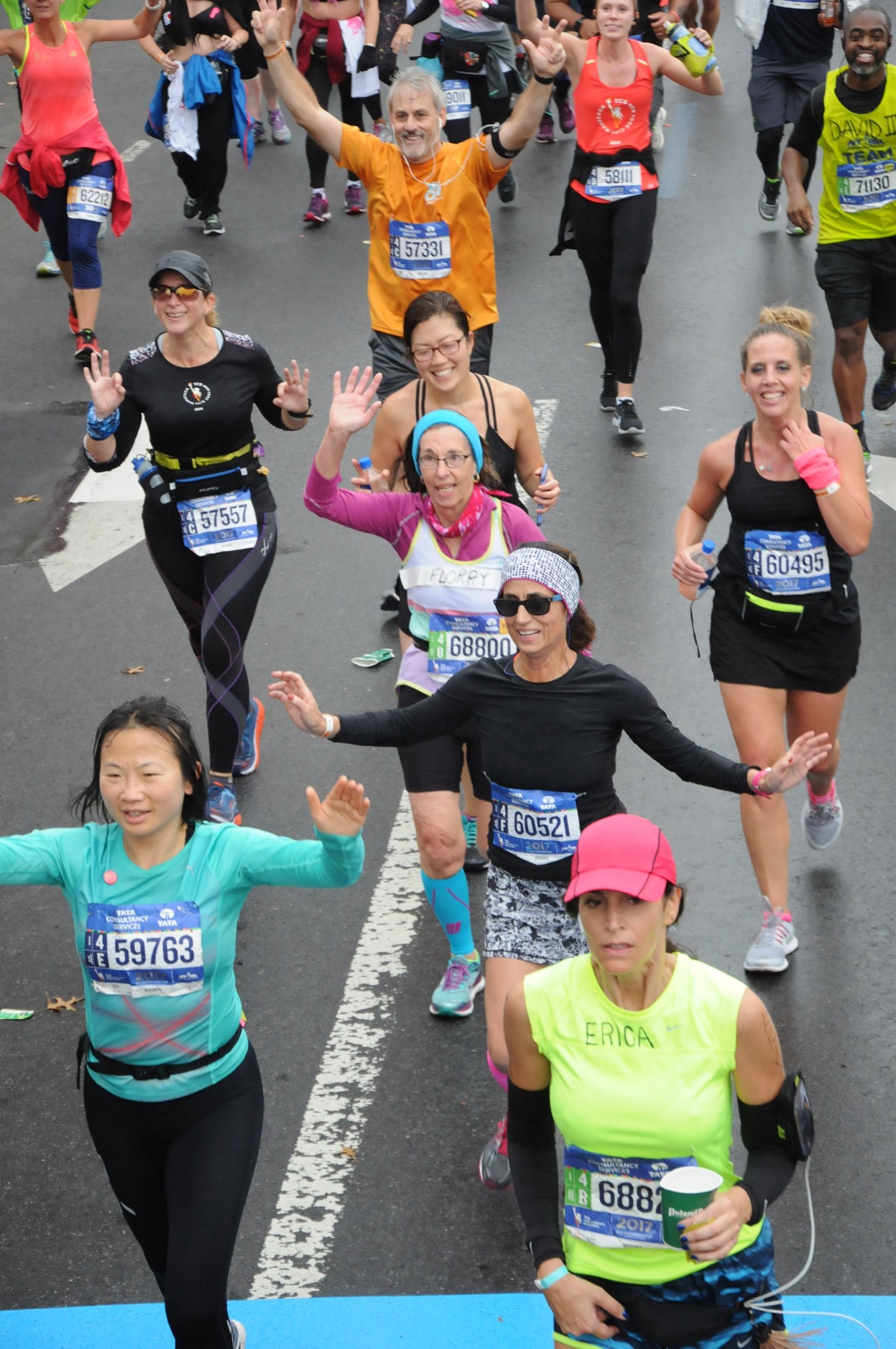
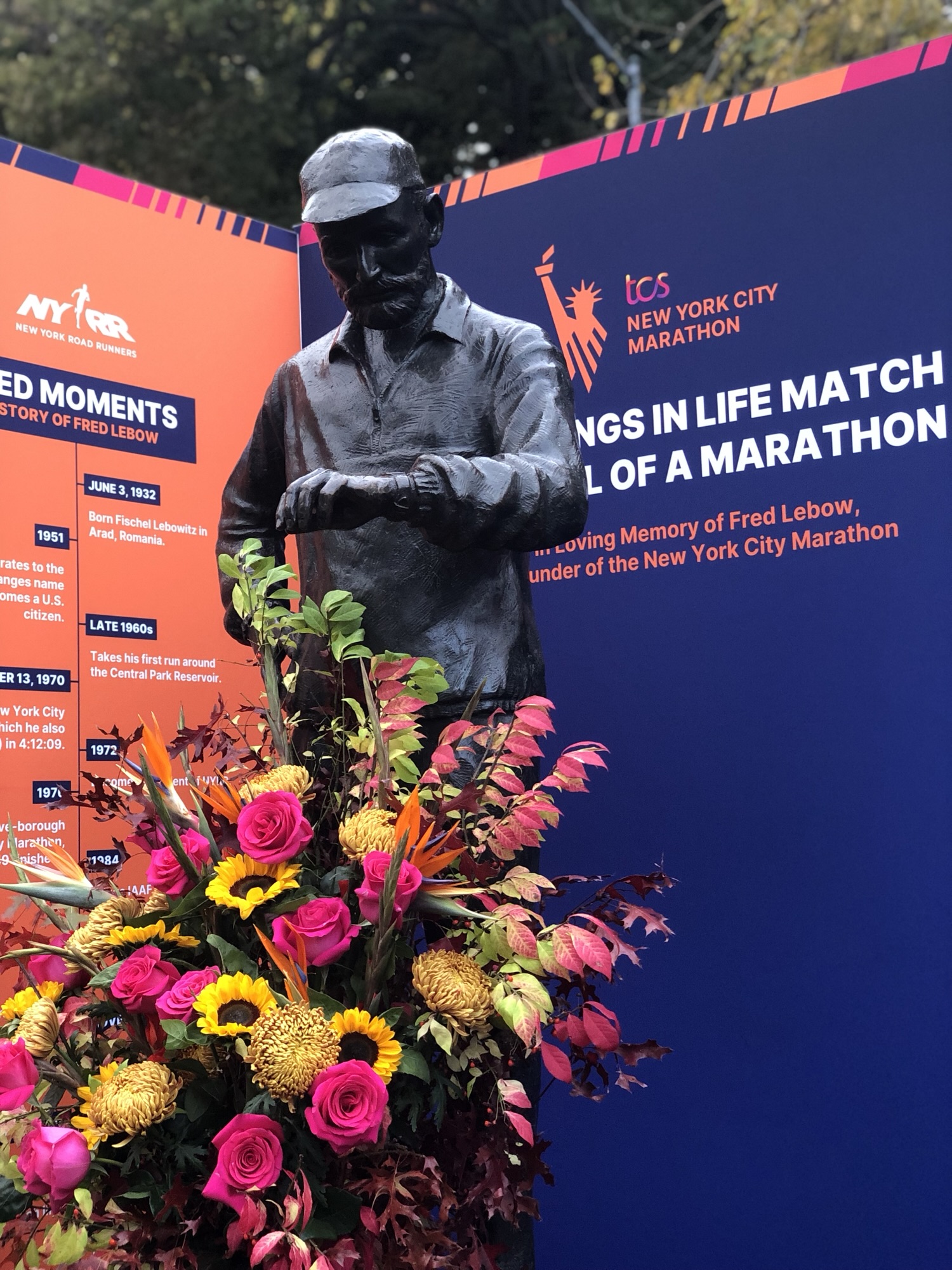
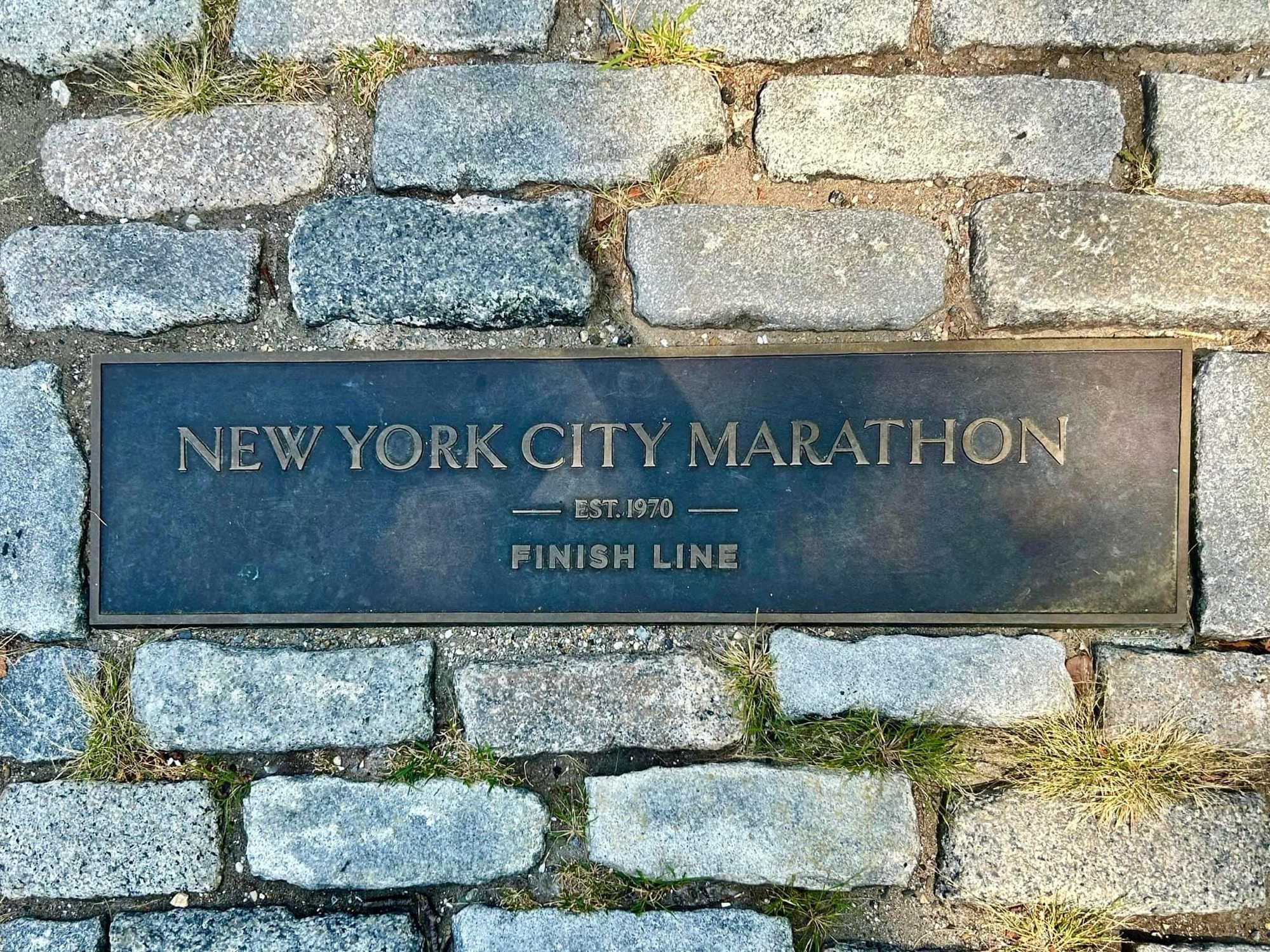
Eight finishes and counting, all from the back of the pack, each one dedicated mile by mile to someone who needed carrying. Sinatra and the Verrazano, Fred Lebow’s statue at the Engineers’ Gate, the silence of the Queensboro at mile fifteen where the Inner Citadel opens for about two miles. This is where the title practice lives: no matter the mileage, there is a way for a crowded mind to clear itself.
From Chapter 49 · The Signs
As you exit the Verrazano and enter Brooklyn, there is a sign.
“You’re like butter, baby — on a roll.”
Brooklyn says hello.
The signs keep coming.
“Run like you just robbed the Louvre.”
“I also run from my problems.”
“All toenails go to heaven.”
“Worst parade ever.”
And the large, comfortable man holding a plain white sign that simply says “QUIT!” while holding out a beer offered to passing runners. I appreciate the commitment to a bit.
The signs on First Avenue are different from Brooklyn’s. Brooklyn celebrates you. First Avenue screams at you.
“When your legs get tired, run with your heart.”
“You are not slow, you are just getting your money’s worth.”
“If you think this is hard, try dating in NYC.”
“Only 2 miles to go.” — Source: Fox News. (Seen at mile 4.)
“My 72-year-old dad is running and he said you look tired.”
You laugh. You keep running. The laughter is fuel too.
And one more, this one not held by anyone, left leaning on a lamppost by a departed spectator, on cardboard but true:
“I’m proud of you and I don’t even know you.”
Someone made that sign and held it up, and I’ve been thinking about it ever since. That is what the city offers on marathon Sunday. Not just to the runners. To everyone moving through it. You are doing something hard, and we see you, and we are proud of you, and we don’t even need to know you. That is New York City. That is the marathon.
The Reading and Watching List
The books and films that appear in these pages: the writer who shaped how I think about running, the Stoic who named the fortress within, and the two documentaries that sent me across the world. Affiliate links are on the way for the books.
Reading
What I Talk About When I Talk About Running
Haruki Murakami
Murakami is the novelist who, more than almost any writer alive, has shaped how I think about the practice of writing and the practice of running. He is funny, he is strange, and he has spent a lifetime carrying both a notebook and a pair of running shoes around the world.
In the book
Chapter 9 gives him a full introduction, and by Chapter 10 I have a theory about the void he names: not emptiness, but “the quiet that arrives when the trying has been replaced by the doing.” I had not known you could reach it through your legs. His words open Chapters 21 and 50.
Meditations
Marcus Aurelius
The Stoic emperor who gave me the name for the fortress within.
In the book
In Chapter 50, crossing the Queensboro Bridge at mile 15, I borrow his Inner Citadel: the place nothing the world does can reach. It is portable, and for about two miles it is open for business. Seneca, Epictetus, and Zeno open Chapters 10, 7, and 9.
Watching
Desert Runners
Documentary, 2013. Directed by Jennifer Steinman
It follows four ordinary people through the full Racing the Planet series: the Atacama, the Gobi, the Sahara, and Antarctica. Four deserts, hundreds of miles, no glamour and no championship.
In the book
Chapter 2. I was alone on a couch on the Upper West Side when I thought, these people are completely insane, and about four seconds later, I want to do that. I showed it to Rob and Ella the next time we were all home and told them what I planned to do. I credit Jennifer Steinman, who made the film, and Mary Gadams, who founded Racing the Planet. One spark lights another.
About the film ↗Genghis Blues
Documentary, 1999. Directed by Roko Belic
The story of Paul Pena, a blind American blues musician who taught himself Tuvan throat singing and traveled to Tuva to take part in its throat-singing competition. Tuvan overtones over blues guitar.
In the book
Chapter 35. I had rewatched it just before the Gobi, and it had been in my head for weeks when a Tuvan throat singer performed at the camp concert on the first night. Hearing those overtones in that setting brought me to tears. Paul Pena’s “Kargyraa Moan” is in that chapter’s soundtrack, and “Kaldak Hamar (The Other Side of the Mountain),” sung with Kongar-ol Ondar, is in Chapter 36’s.
About the film ↗Words That Stayed
Every chapter opens with an epigraph, a line that set the terms for what follows. A few of them here. The full set, one per chapter, is in the book.
On beginning, and crossing
You can’t cross the sea merely by standing and staring at the water.
Rabindranath Tagore
Man cannot discover new oceans unless he has the courage to lose sight of the shore.
André Gide
On pace, and the Stoic mind
Well-being is attained little by little, and nevertheless is no little thing itself.
Zeno
Seek not that the things which happen should happen as you wish; but wish the things which happen to be as they are, and you will have a tranquil flow of life.
Epictetus
On the mind, and what it becomes
The mind is everything. What you think you become.
Attributed to Buddha
My heart steady, calm, no ripples in my body or mind. No static. Just huge globs of obvious colors.
From the yellow notebook, Patagonia 2017
Run / Walk / Crawl
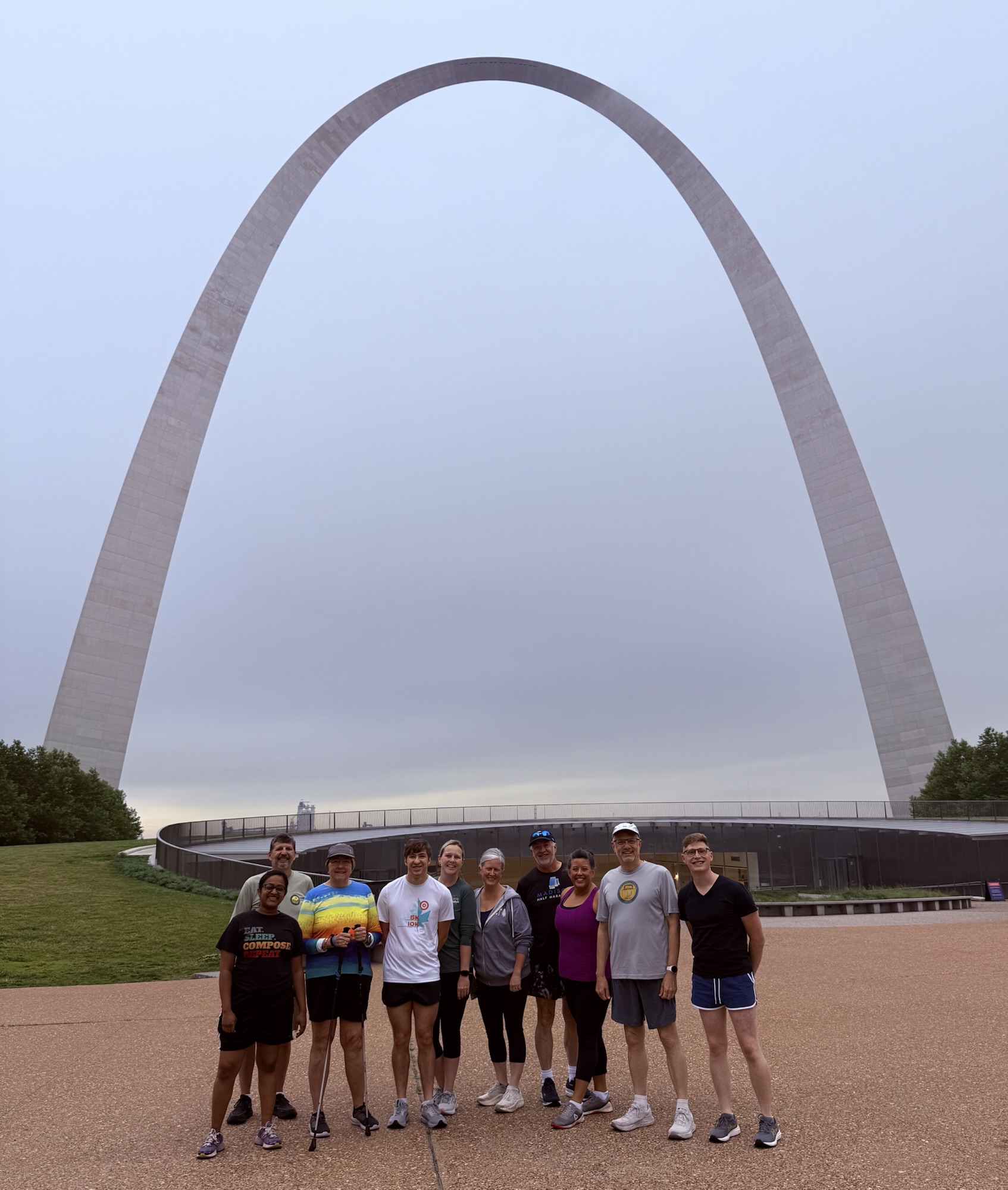
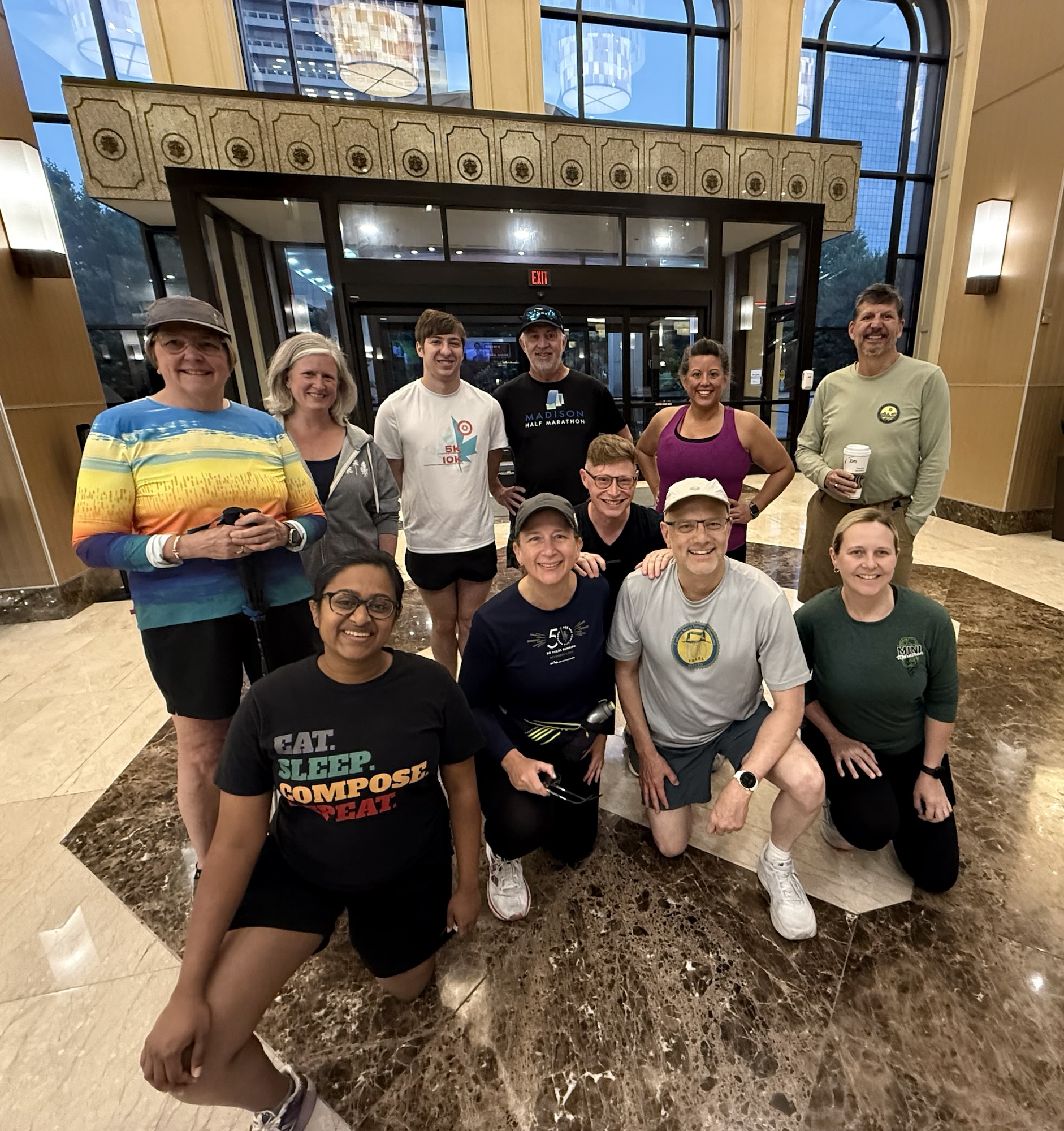
Run / Walk / Crawl is a morning event I lead on the road at music conferences. Early, before the day’s sessions begin, I put on a my NYRR shirt and running shoes and take whoever shows up out to explore the city we are visiting. A run; or a walk; or a crawl. If you do not run, you walk. If you do not walk, you crawl. Out and back, at your own pace, and no one is left behind because no one is leading.
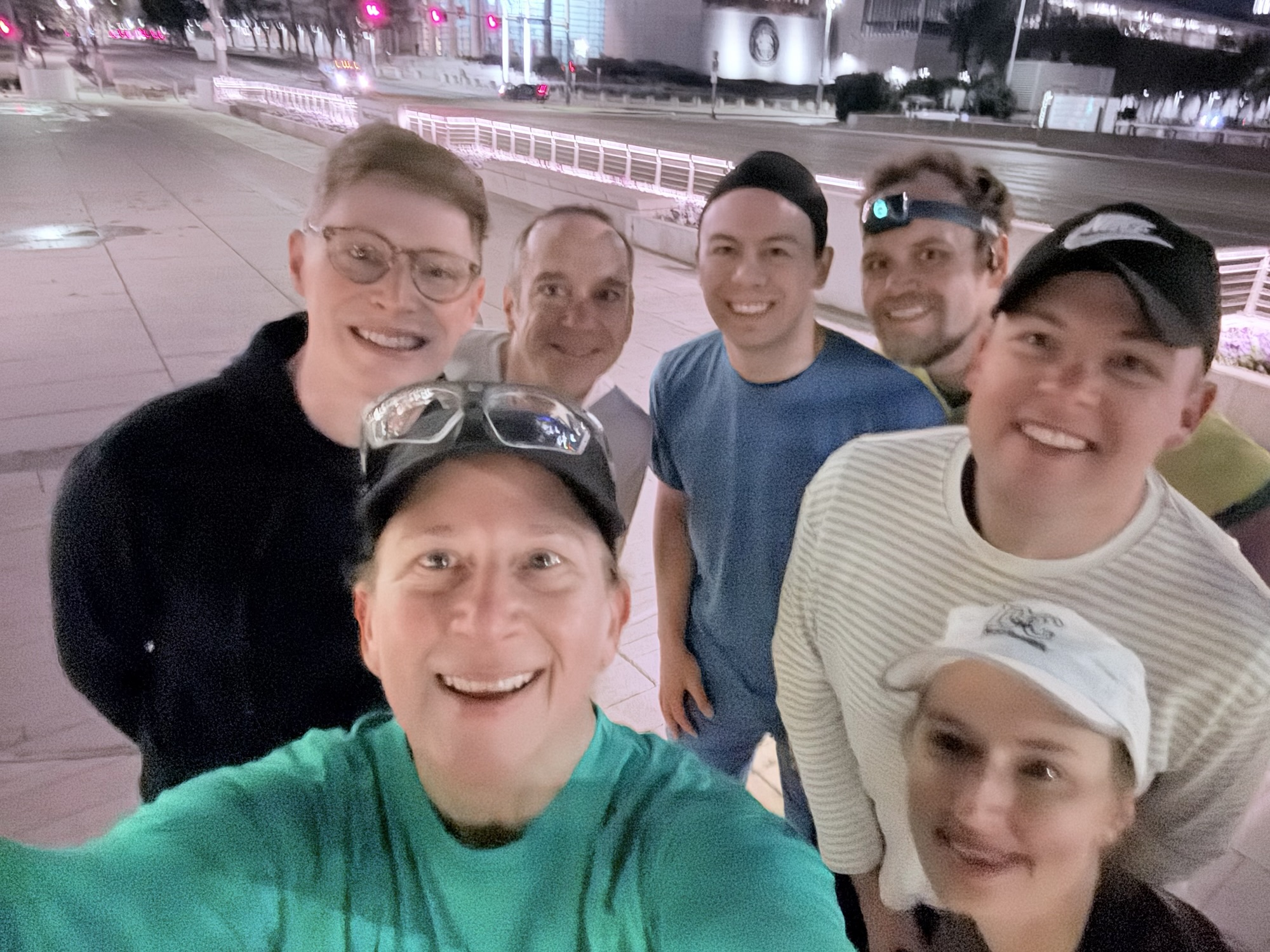
It began with what I call walkabouts: when I arrive somewhere new, I run it, walk it, and explore it before the city has had a chance to put on its day. The music industry is made of indoor people, and I couldn’t keep what I had learned to myself. The first conference run was in Cincinnati, at 6:15 AM, and the runner count was one. Me. I took a lobby selfie, ran the river alone, saw a heron, and posted about it with humor. Attendance: one. Pace: my own.
Then I changed the official name from “Run” to “Run/Walk/Crawl”. The first time I used it, four people showed up. The next time, eight. Then, in St. Louis, thirty were already stretching in the lobby at 5:45. That is the boomerang: you throw the run out with one runner and the courage to take the selfie when no one comes, and eventually it comes back.
It has grown far beyond a those first events, and I still lead these runs today. They have taken me up the Rocky steps in Philadelphia, where a few of us lifted our arms and sang the movie theme like a small choir of fools, through San Francisco, where the early trolleys were so empty they looked staged, and through Chicago and Los Angeles. In Dallas we flew a drone overhead, and the footage shows twenty people turning a corner in the early light. Run / Walk / Crawl is now part of the programming at the Chorus America conference. I write about it in the book, but the runs keep outrunning the chapter.
The mantras I carry on these mornings: Your race, your pace. One spark lights another. Curiosity is the compass.
On the 2027 schedule
Planned for 2027: Run / Walk / Crawl at ACDA Nationals (March, 2027, Minneapolis) and at the Chorus America conference (June 2027, Los Angeles).
If you are heading to either, come run with me. If you organize a conference and would like Run / Walk / Crawl on your program, or you simply want to know where the next one is, get in touch: Iris@DCINY.org.
If our paths cross at a conference or a race, come find me. We’ll go slow together.
The Back-of-the-Pack Glossary
The book has its own vocabulary. These are the words and phrases that came out of the miles and stayed.
Back of the Pack
At a Racing the Planet event, the sweepers follow the last runners, and in a metaphor that became universal in our small back-of-pack civilization, they are the lions and we are the slowest gazelles. The fast runners do not see what we see: a small herd of slow gazelles who have come to like each other in the way only people who are about to be eaten can come to like each other. It is a faith as much as a position: you do not have to be fast, you have to keep going.
SAS Pace
Slow As Shit, or Patagonia Pace: the tempo I could hold from the first hill to the last. The runners who pass you in the first mile are not your problem. The red zone is not your friend. SAS Pace is about the tempo of movement, and it keeps you moving sustainably.
The Professor and the POW
Two poses for lifting a heavy pack off your shoulders on a long climb. The professor leans forward from the waist with arms behind the back, the way a tweed-jacketed professor walks the lawn of an Ivy League campus contemplating a sonnet. The POW laces fingers on top of the head, the way movie POWs walk when being marched somewhere. Hold for thirty seconds and feel your shoulders come back to life.
Pocket Time
The other half of the operating system. If SAS Pace is the engine, Pocket Time is the accounting: the discipline of not stopping unnecessarily. Straight road ahead? Run it. Checkpoint? Do you really need to take your pack off and sit? Fill the water bottle, eat your bar standing up, bank another minute. Every minute pocketed at an easy stretch is a minute available to spend on a hard one. On Stage 4 in the Atacama salt flats, my pockets were sewn shut. A good day, I learned, is a filling station.
Mental Laundry
I think of six point two miles as Mental Laundry: the clearing-out that happens when my body is busy and my mind does not have to be productive. You add soap before the clothes, the mind starts to stir things up, and then the body takes over. It does not solve the problems. It cleans the lens through which the problems are seen. The clothes come out clean, but the problems are still there, and you can see them more clearly now. The title chapter is the NYRR Manhattan 10K at nine degrees.
The Inner Citadel
The Stoic emperor Marcus Aurelius called it the fortress within, the place nothing the world does can reach. It is portable. You can carry it across the Verrazano, through Brooklyn, and into the strange, suspended silence of the Queensboro Bridge, where the cheering stops and you are alone with your legs and the East River below. For about two miles, between the end of Brooklyn and the beginning of First Avenue, the Inner Citadel is open for business.
DNF as Information
DNF officially means Did Not Finish, and for many runners it is the badge of “not to be discussed or mentioned” until they have made their way to the other side of perspective. On Day 2 in the Gobi my will disintegrated in a poof, and within the hour of accepting the DNF I had asked whether I could stay on as a volunteer. Of course I’m staying. The DNF was information.
Spreagadh (SPRAH-gah)
Irish. The spark that reminds you to start again even when you feel stuck, the quiet voice that says: you are not finished. In the old Irish stories the heroes were not always victorious. What made them heroes was that they kept rising, and spreagadh is the word for that rising. In Mongolia, it was already at work before I knew its name.
Glimmer
A small warm brightness that makes you lean toward the world rather than away from it. A moment of unexpected light that reminds you of why you are alive and what you are capable of. The rainbow in the Atacama was the first glimmer I ever consciously noticed, and I spent the next several years training myself to recognize, name, and collect them, until I had a category, a word, and a practice. More in Camera Dark.
Lifeboat People
The people you want in your lifeboat. In a Racing the Planet tent, the social varnish we apply to ourselves in normal life wears completely off, and what is left is the actual person. What I mean specifically is your tentmates.
Walkabout
My word for what I do when I arrive somewhere new: I run it, walk it, and explore it before the city has had a chance to put on its day. The term comes from the Aboriginal Australian tradition, and I use it with respect for its original meaning, a deliberate going out on foot into new territory to reorient yourself, to let the land tell you where you are.
Run / Walk / Crawl
The marathon is what I do. Run / Walk / Crawl is what I give. If you do not run, you walk. If you do not walk, you crawl. Out and back, your own pace, and no one is left behind because no one is leading. See the Run / Walk / Crawl section above for how it started and where it goes next.
The Gear
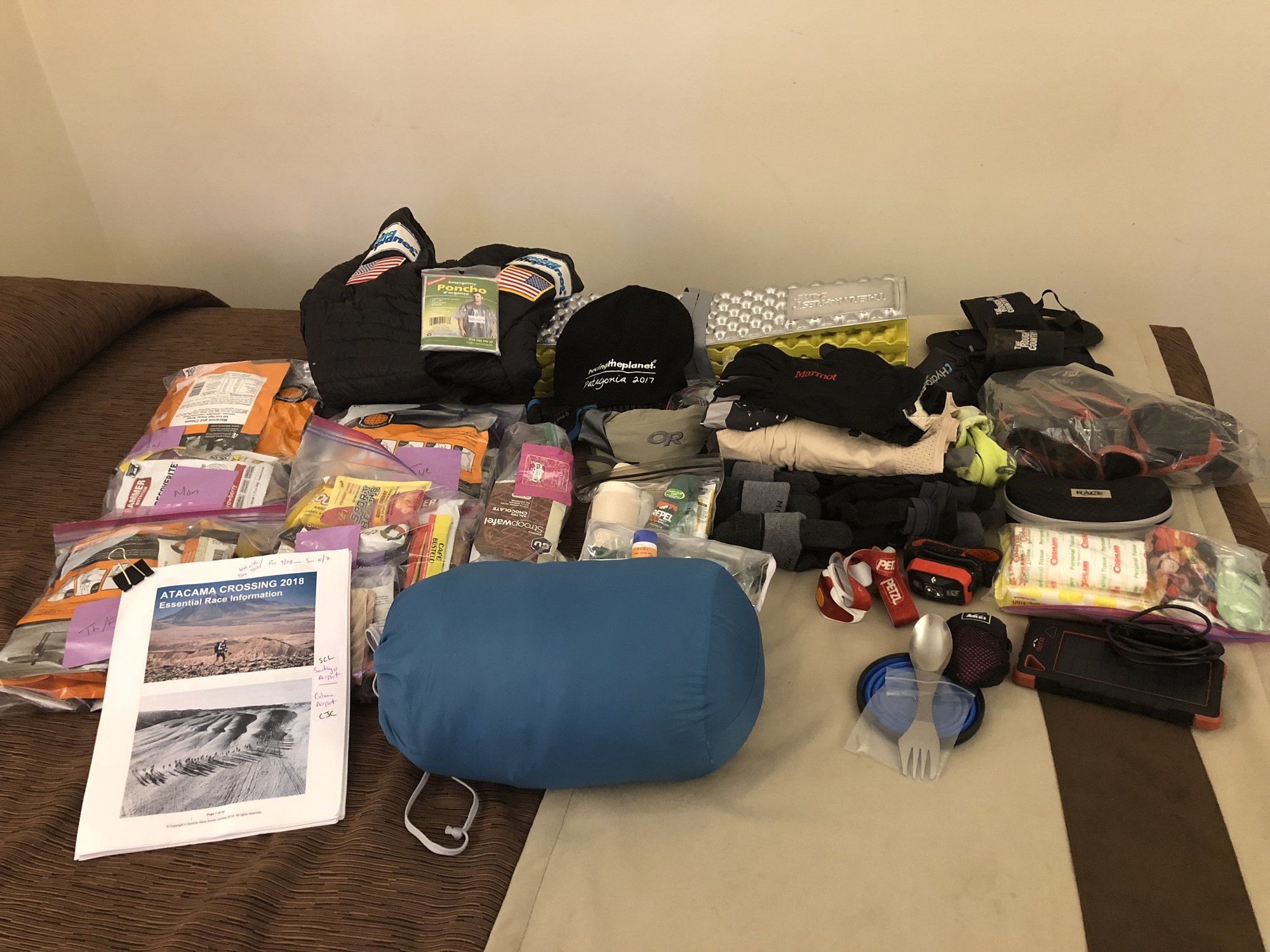
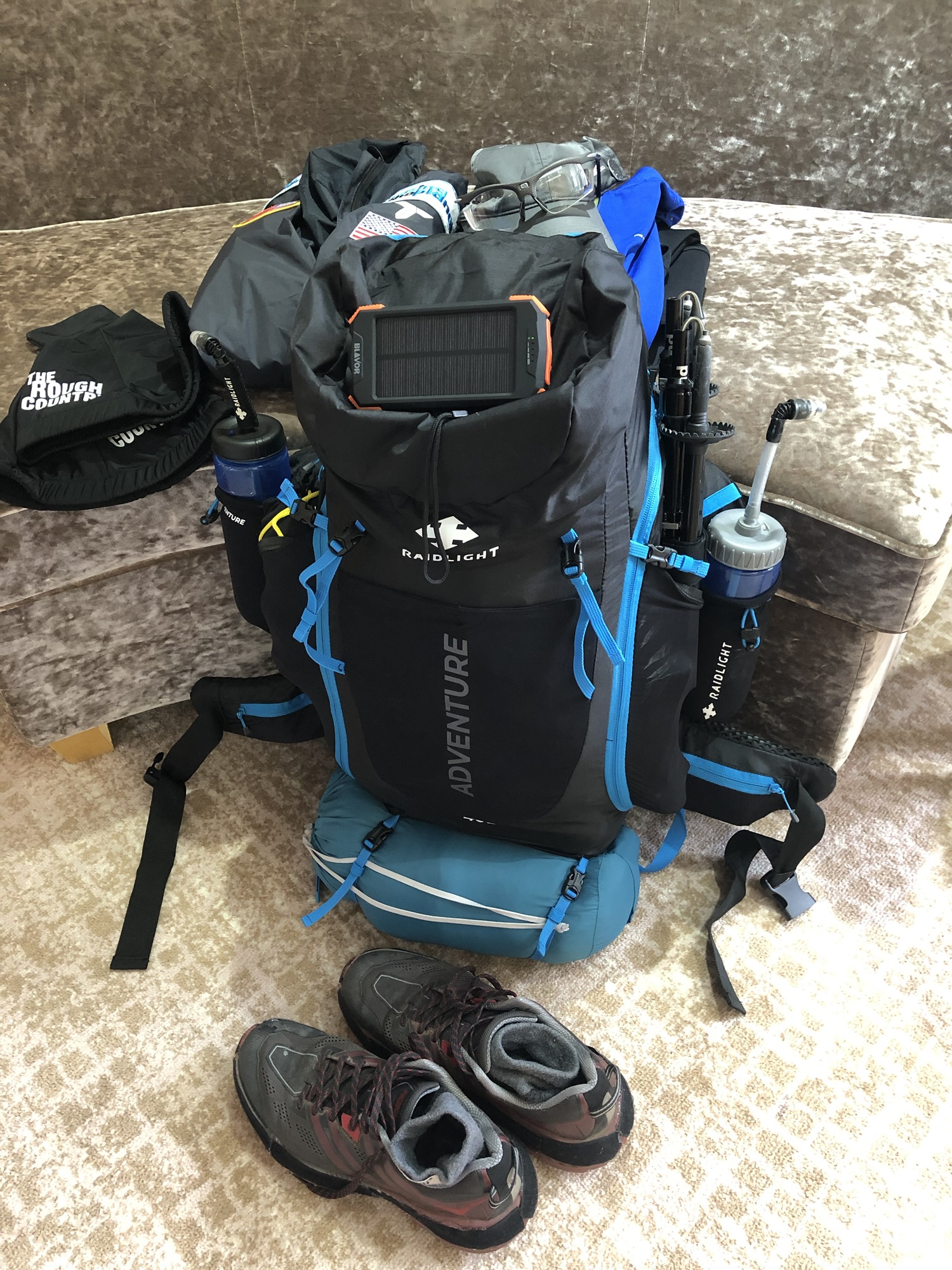
Self-supported means you carry everything you need to survive for seven days on your back: shelter’s provided, but food, clothing, medical, and the rest ride with you. The art is in what you take and what you leave. After every race I keep two lists: what I was thankful to have carried, and what I would do differently next time. These are the things that actually carried the miles, explained the way the book explains them.
The Pack
Everything for seven days, on your back, every mile. Twenty-eight and a half pounds the first time in Patagonia, a pound under the maximum and a pound over what I’d hoped. Lighter every race after as I learned what I could leave behind: a year of learning, measured in kilograms. The back of the pack is famous for carrying too much. I was no exception, at first. By the Gobi I had a Raidlight pack, chosen in prep for that race, and I am so glad I did: padded shoulders, a curved design that lifts the load off the back, and lots of clever hidden pockets. I came in just under eleven kilos, which I am proud of.
Toe Socks, Body Glide & Foot Powder
Always, always, always. Body Glide all over the foot, copious foot powder in the sock, then Injinji toe socks. In Patagonia that combination added up to one phrase: no blisters. I have crazy toes, the farthest thing from straight and very blister prone, and these protected my feet like champs.
Trekking Poles & Gaiters
The poles made the professor pose and the prisoner-of-war pose possible, the two tricks for lifting a heavy pack off your shoulders on a long climb. In Patagonia they were collapsible Diamondbacks, a last-minute addition my coach said I was strong enough to skip. He was right, but on technical climbs and muddy river crossings they saved my butt over and over. The gaiters keep the desert out of your shoes. Mine in Patagonia were short Salomons that attach with Velcro. In the Atacama, I attached mine with Gorilla Glue the night before the race, in a hotel room in San Pedro, and could no longer feel my fingertips.
Camp Shoes
I found my perfect fit in Finland with Vibram water shoes. They are great in camp, a standby if anything goes awry with my feet or running shoes, and the perfect footwear home on the plane, when feet can swell to unbelievable sizes.
Freeze-Dried Fuel & Steeped Coffee
Seven days of calories you carry and rehydrate with hot water from the fire, eaten on a camp stool outside the tent while strangers become tentmates. And the coffee, which is never optional: the one ritual that travels across all four deserts and every café in every arrival city. Two lessons: move all of your food into ziplocks at the hotel, because the expedition packaging is too much space and too heavy, and know that appetite can vanish. In the Gobi the thought of freeze-dried anything turned my stomach, so next time I am experimenting with well-loved mashed potatoes and noodles.
Tailwind & the Treats
In Patagonia, Tailwind was the best of the best: nutrition, sodium, calories, and electrolytes in one sleeve of powder in the water bottle, and my sensitive stomach had no issue. Bounce protein balls marked the halfway point every day, a treat that tastes like candy to me. In Lapland the wins were sports beans, dehydrated cheese, salt tabs, and sugar-free chocolate. For the longer hauls, I am still revisiting what my body needs.
Knucklelights
My standard in the city for lighting my way through Central Park before dawn. I thought they would be overkill in Patagonia, where headlamps are the recommended gear, but they were brighter, and they let me light up exactly what I needed to see, including the hallucinations around hour 23 of the Long March. When my hand got tired, they clipped to my backpack.
The Buff
I remembered it from the documentary Desert Runners, and they were right. In New York City I use about five percent of its range, for sweat. In Patagonia, turn that dial to 110 percent: it covered my head most of the time, protecting me from sunburn to sleet and snow, and made me feel like a badass.
The Small Things
Compact washcloths. A few paper towels in the kit, because cups and spork get mighty disgusting. And the next-time list: leave the wedding ring home, bring a blow-up air mattress, and find a better water bottle system.
The Garmin
Distance, pace, elevation, heart rate: the cold hard facts when your own sense of time has stopped meaning anything. It congratulated me on my longest run ever after eleven hours on Day 1 of Patagonia, and logged a record heart rate of 184 on the final 10K in the Gobi. The clock that mattered.
The Yellow Notebook
Waterproof, a gift from Rob and Ella, meant to be opened only once I was moving. It filled with named blisters, a line after Stage 2 that read “After this I can accomplish anything,” and, when the results came in, “Dead Last and Proud.” I found it again years later in my work bag. It is, in a real sense, where this book began.
Links to specific brands and models are coming as the book nears release.
The Four Deserts
Postcards from the Back of the Pack
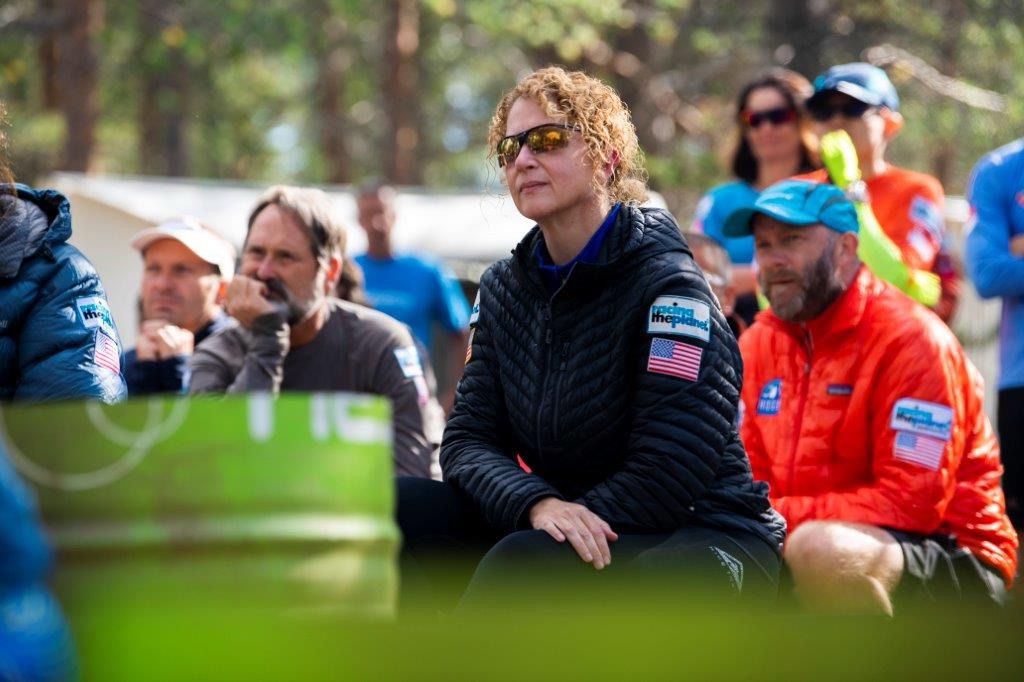
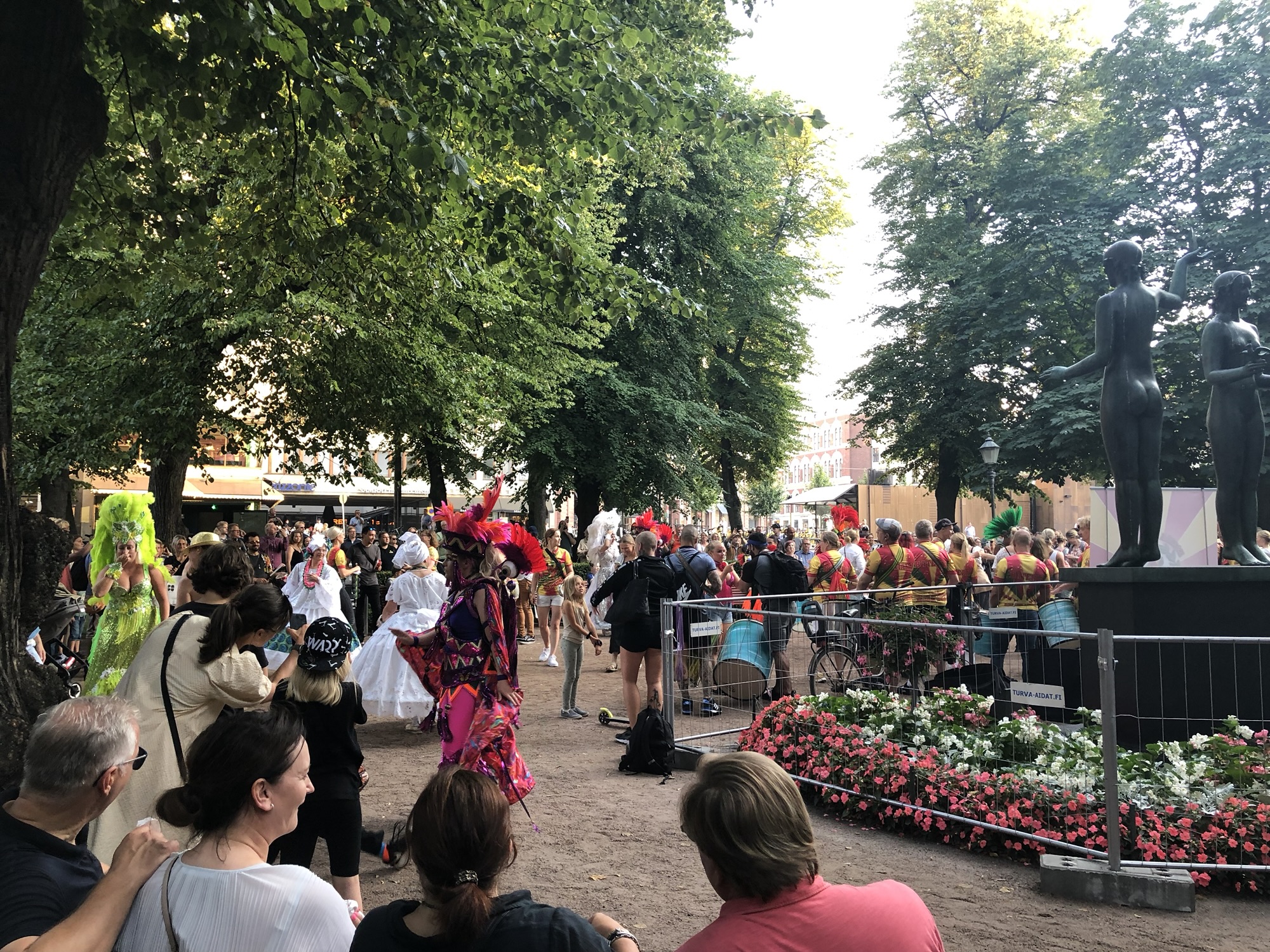
Patagonia, the Atacama, Lapland and the Gobi, shuffled together. Tap any photo to see it full size.
Photos: Racing the Planet, and a few of my own.
Representation and Rights
Literary agents, publishers, and rights inquiries for Mental Laundry and its companion memoir, Camera Dark:
Readers, come say hello on Substack.

