By Iris Derke
Let me tell you about my public persona.
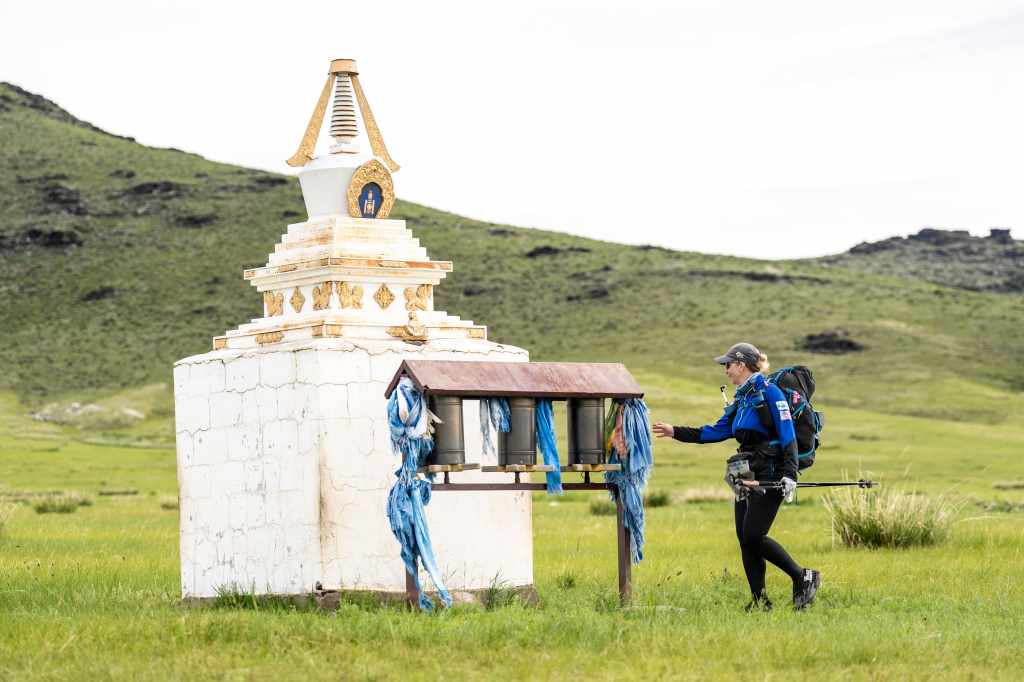
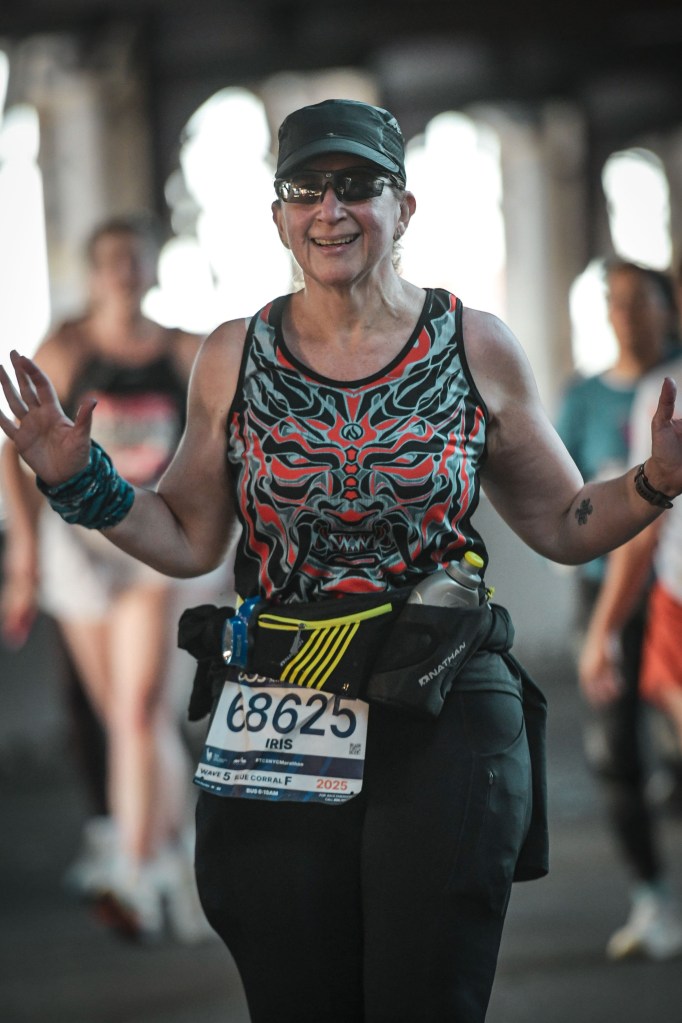
“Unstoppable.” That’s the word people use. Wife, mother, New York City concert producer, classical flutist, ultramarathon runner. Eight-time Inc. 5000 honoree. The person who answers the phone, solves the problem, appears in the room with exactly the right energy. The face that says: I’ve got this.
Nobody asks if the person with that face is okay. Nobody thinks to. Why would they? She seems fine. More than fine. She seems like she has the answers.
So I kept the face on. And underneath it, I got very quiet, and very alone.
In the Fall of 2024, alcohol left the building. And what has arrived since, the clarity, the mess, the muse, the tools, the tribe, is what I want to talk about here.
This is not a recovery post. I want to say that clearly, and mean it. This is not about AA, labels, or counting days. It’s a life post that happens to include the year I stopped drinking, because that departure is what finally broke a cycle I’d been running for too long. And the things I found on the other side of it are things I wish someone had handed me years ago.
So. Here they are.
What White-Knuckling Actually Looks Like
I’ve written about this before, but it bears saying again, because I think it’s the thing most people don’t name until someone names it for them.
White-knuckling is the art of holding on so tightly to the appearance of “okay” that you don’t have a free hand left for anything else. It’s the gripping. The managing. The performance of being fine, even when fine left the building a long time ago.
I was a world-class white-knuckler. Still am, in the moments when I forget to notice. The grip was so practiced it felt like strength. It wasn’t. It was exhaustion wearing strength’s clothes.
The thing about alcohol, and I say this without drama, is that it understood this arrangement perfectly. That damn Wine Witch, the alcohol demon of many names, she said: come on in, set that down, I promise you that no one is watching. She learned my exact vocabulary of exhaustion and used every word. She promised silence and delivered static noise. She promised rest and release and instead delivered bone crippling debt.
What I’ve learned is that you cannot white-knuckle your way to the other side of anything. You can only let go.
That sounds simple. It is the hardest thing I have ever done.
The Sober Sisters I Almost Didn’t Join
Here is the thing about the lifelines that change your life: they almost always arrive looking like something you don’t want.
Sober Sis was a community of women I nearly didn’t walk into. I had every reason to keep walking. I had the face on. I had the answers. I did not, I told myself quite emphatically, need a group.
What I found instead was a room full of women who could see me, the actual me, not as one of the many faces that others had identified me. Here I found a new tribe of people, other than my family and close friends, who knew what I was capable of at my best and wanted to hold me to that, and also hold me when I fell short of it. I had not been paying attention to people like that. I had been too busy being Unstoppable to notice that I was otherwise disintegrating.
This is the thing I want you to hear: the tribe you need is usually waiting somewhere you have talked yourself out of entering.
Walk in anyway. Your resilience tribe awaits you.
I wrote more about the moment I almost didn’t find that room, and the word that crystallized for me at the bottom of the ocean when I did, in Over the Wall.
What Sober-Minded Living Actually Means (to Me)
Sober-minded is not the same as sober. I want to be precise about this, because that clarity and perspective matters here.
Sober is the absence of something. Sober-minded is the presence of everything else.
In this most recent chapter, I have been rebuilding what I call the daily implements, the small, portable, completely unsexy things that actually keep my machinery running. The morning practice. The word of the year. The mantras. OCRO, which I inherited from my grandfather Papa and didn’t understand until much later: Our Cup Runneth Over. A stoic principle of gratitude, a gift delivered kindly and with love that I didn’t fully unwrap until decades later.
Sober-minded living, for me, has three pillars.
The first is what I think of as clarity as a practice. Not a state you arrive at, but something you tend to daily. This is where the brain science came in for me: understanding neuroplasticity, understanding that the stories we tell ourselves about who we are and what we’re capable of are not fixed facts but wiring that can be changed. You can actually rewire. I did not know this at fifty. I wish I had known it at thirty.
The second pillar is tribe. I keep coming back to it because it keeps being true: people fuel is not a luxury. It is the source. Without the people who could hold me while I found my footing, there is no version of this story that ends the way it does. I wrote about what that looked like when it counted most in Running Against Demons.
The third pillar is the body as lifelong practice. This is where the running comes in. Not as sport, but as metaphor for everything. I ran 155 miles through the Atacama Desert. I ran across the Arctic Circle of Finland. I ran through the Gobi Desert. Each of those races taught me the same thing in a different climate: forward motion is itself the answer. You do not figure out the next step by standing still. You lean in and let gravity do some of the work. Lean through to get to the other side. I wrote about where the body and the sober mind meet in Mind Over Muscle.
What the Muse Returning Felt Like
I want to tell you about the writing.
In 2013, I was called to jury duty in a Manhattan courthouse. A random New Yorker whose jury number was called, sitting still with nothing to do but wait. And in the waiting, which the muse loves, she is drawn to enforced stillness the way I am drawn to hazelnut chocolate and strong coffee, something cracked open. I wrote pages. Whole story threads connecting music and business and New York in ways I hadn’t thought to connect before.
Then civic duty was over. I went back to work. And I buried it.
The buried version of myself, the one who could write for hours and felt she’d returned from somewhere important, waited patiently, aside from blips and blurbs here and there for many more years before I gave her space to breathe again.
The muse is patient. She is also persistent. And she always comes back. I wrote about one of the strangest gifts that came with putting down the drink, the return of those early, dark, wide-awake hours, in Lost Insomnia.
This past March, I woke up at four in the morning, when my muse likes to roar, and could not stop writing. Pages of it. Stories and thoughts pouring out in a way that felt less like effort and more like transcription. Non-stop writing that delighted and entertained me. A faucet turned full tilt.
The clarity that came with putting down the drink had cleared the channel. I had not realized how much static was in the way until the static was gone.
What has returned, along with the words, is joy. Joyful to write. Joyful to revisit times, places, people, and me. Especially me. Not the face. Not the producer on the mountain top. The actual, whole, somewhat chaotic, still-figuring-it-out me, who was always in there and is now, at last, uncovered.
What I Wish Someone Had Told Me
There is a question I keep returning to. Have you ever looked back at a photo of your younger self, knowing you thought you were too much or not enough, too loud, not thin enough, not polished enough, and then, a decade later, you look again and realize you were glowing and perfect? And you wonder: why didn’t I know it then? Why didn’t someone tell me?
Well. Here we are. Now.
My sober sisters and I have been sitting with a particular version of this feeling together, that bittersweet mixture of grief and gratitude and time. We found a word for it in Saudade.
The things I would hand to the version of myself who needed them most:
The grip is not the same as the strength. Let go earlier than feels safe.
You are not alone in the way you think you are alone. The people who can see you, the actual you, not the face, are there. You have to let them see. No secrets.
White-knuckling is not a virtue. Neither is suffering silently on the mountain top. Asking for help is the braver thing. It is also, I have found, the more effective thing.
The muse doesn’t leave. She waits. Build the conditions that make her comfortable arriving: stillness, honesty, connection, and just enough space in your schedule to hear her.
And this: you are not too late. The window you thought was closing was opening all along. You just couldn’t see it from where you were standing.
You have to step out on the sill first.
A Note on the Book
I’ve been writing a memoir. I wasn’t planning to, or rather, I was hoping to for more years than I care to acknowledge with fingers crossed and doing nothing about it, and I kept burying it. But the muse, as I said, is persistent.
The book is called, provisionally, Camera Dark. It’s a life memoir, built around three pillars: sober-minded living, the real business of showing up, and running as metaphor for everything. It is not a recovery memoir. It is the book, the manual, that I wish someone had handed me, written for the creative in all of us, that inner child who once burned with curiosity and passion, for music, for art, for film, for words, for whatever it was that lit you up before the world talked you out of it.
For the person who holds it together in public and is quietly feeling like they are falling apart in private. For anyone who has ever looked around at their own life and wondered how they got here, and whether there’s still time to go somewhere else.
There is.
If you want to know when Camera Dark is ready, subscribe below. I’ll whisper it in your ear when it’s time.
Iris
New York City, 2026
 Iris DERKE
Leave a comment